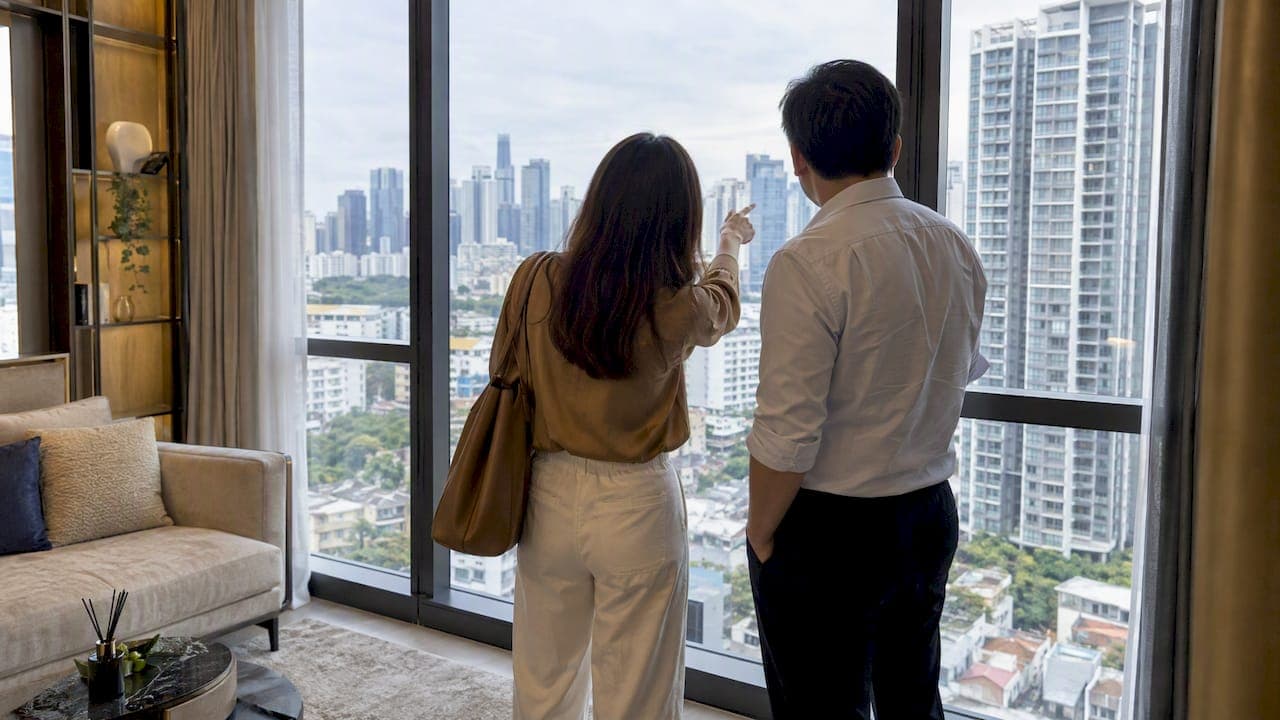
Prioritize an efficient layout, an unobstructed view protected by low-rise surroundings, and a floor level matched to your resale horizon, then confirm the premium you are paying is justified rather than cosmetic. This article walks through how to verify each factor at the showflat, how Singapore's stamp duty and CPF rules change your real cost, and what contract protections to insist on before signing.
TL;DR:
- Evaluate the usable floor space by measuring corridors, bedroom layouts, and ceiling height to ensure the unit is practical for daily living.
- Compare premium prices for units with similar layouts by calculating the price per square foot and assess if views or features justify higher costs.
- Check that showflat measurements match official URA approval notices and review all contractual clauses with legal advice before signing.
- Understand that buyer profile and unit location influence stamp duties, with foreigners paying up to 60% ABSD and premium tiers varying by view, floor, and orientation.
- On launch day, register early, prepare a shortlist of units, verify the actual unit against plans, and have legal review ready before committing.
Table of Contents
- Practical unit-selection checklist: layout, orientation, floor, stack and view
- Pricing, premiums and developer strategy: how to spot overpaying
- Financing, taxes and affordability checks specific to Singapore buyers
- Contract, legal and due-diligence checks (showflat rules, sales contract, and agent CDD)
- Booking mechanics and practical steps on launch day (EOI, priority selection, option to purchase)
- Resale, exit and market context: assessing future demand and supply in Singapore
- Author expertise and client context: how this guidance maps to Aurea units
- Top mistakes buyers make and a launch-day checklist
- Aurea as an option: how Aurea's layouts and amenities match the checklist
- FAQ
- Sources
Practical unit-selection checklist: layout, orientation, floor, stack and view
Start with the numbers on the floor plan before you even think about finishes. Singapore developers quote strata area, which includes air-con ledges, bay windows and sometimes voids. Ask the sales staff to point out what counts as usable floor space once furniture needs to fit, since a unit with a large strata area but an awkward bay window can feel smaller than one with a tighter but efficient layout.
A few checks separate a workable unit from one that fights you daily:
- Measure corridors and entryways against standard furniture dimensions rather than trusting the showflat's scaled-down props.
- Check if the bedrooms can fit a queen bed plus a wardrobe without blocking the door swing.
- Look for structural columns or beams inside the living or dining area that eat into usable space.
- Confirm balcony depth is enough for actual use, not just a decorative ledge.
- Ask about ceiling height, since anything under 2.8 meters can make a unit feel compressed regardless of floor area.
Orientation affects comfort every single day you live there. Units facing north or south generally get less direct afternoon heat, which keeps interiors cooler and can reduce air-conditioning load. East and west-facing units catch stronger morning or afternoon sun, which some buyers like for natural light but which raises indoor temperatures in the late afternoon.
Floor level is a trade-off, not a simple "higher is better" rule. Mid-floor units often strike the best balance between view, price, and resale liquidity, since they avoid the noise and dust of lower floors while skipping the premium that top-floor units carry. Higher floors win when the view is genuinely protected by surrounding low-rise zoning, but a high floor overlooking another tower's wall is a wasted premium.
Stack plan checks matter just as much as the floor. Look at which units directly face yours across a gap, whether bedroom windows line up with a neighbor's living room, and whether the unit sits above or below communal facilities that generate noise, like a gym or function room. Proximity to a major road or an MRT viaduct is worth a site visit at different times of day, since showflat visits rarely happen during peak traffic hours.
Verification should not stop at the showflat. Cross-check the unit's orientation and surroundings using URA's planning maps and do a physical site visit if the plot is still under construction, since marketing renders can exaggerate greenery or understate nearby construction. A showflat measurement checklist that uses URA data and site plans alongside REALIS transaction records helps you compare what you are shown against what is actually being built. A layout efficiency guide with ten practical checks is a useful second opinion before you commit to a stack.
Pro Tip: Bring a tape measure and your own furniture dimensions to the showflat instead of relying on the staged scale models.
Pricing, premiums and developer strategy: how to spot overpaying
Developers price units in tiers, and the gap between the cheapest and most expensive unit on the same floor plan is rarely random. Common premiums include a facing premium for units overlooking a pool, park or unobstructed skyline, a high-floor premium that increases per level, and a corner-unit premium for extra windows or a wraparound layout.
To judge whether a premium is fair, calculate the price per square foot for several units sharing the same layout and compare the dollar difference against what you are actually getting. If a unit two floors higher costs $40 more per square foot than an identical layout below it, work out what that means in total dollars for the unit size and ask yourself if the view or privacy gain is worth that amount to you specifically, not to the market in general.
A mid-floor unit with an unobstructed green view and an efficient layout often outperforms a prestige-facing unit with a cramped layout at resale, a pattern that shows up repeatedly in how Singapore buyers prioritize space and practicality over a marketed view.
Some signs a premium will hold its value at resale:
- The view is protected by a park, reservoir or low-rise conservation zone rather than an empty plot that could be redeveloped.
- The unit faces away from main roads, reducing noise complaints that often show up during resale viewings.
- The layout premium pays for genuinely usable extra space, like a study or utility room, not just a marginally bigger living area.
Premiums are harder to justify when they are tied to a view that could be blocked by future development, when the "corner unit" label applies to a stack with awkward window placement, or when the sales team cannot explain the pricing gap beyond "it's a popular stack." Watch for deferred payment schemes marketed as a benefit: they can mask a higher headline price, and the cash-flow relief may not offset the premium you are paying upfront.
Financing, taxes and affordability checks specific to Singapore buyers

Before falling for a unit, run the numbers on what it actually costs you to own it. Buyer's Stamp Duty (BSD) in Singapore is charged on marginal bands regardless of buyer profile: 1% on the first $180,000, 2% on the next $180,000, 3% on the next $640,000, 4% on the next $500,000, 5% on the next $1.5 million, and 6% on anything beyond that).
Additional Buyer's Stamp Duty (ABSD) depends entirely on your buyer profile. As of April 27, 2023, foreigners pay 60%, entities pay 65%, and Singapore citizens buying a second residential property pay 20%, figures that make a second property dramatically more expensive for citizens and a near non-starter for foreign buyers without local status.
| Buyer profile | ABSD rate (as of April 27, 2023) |
|---|---|
| Singapore citizen, second property | 20% |
| Foreigner | 60% |
| Entity (company) | 65% |
CPF Ordinary Account savings can be used toward your purchase, but the amount is capped at the lower of the purchase price or valuation, and leases running to age 95 affect how much CPF you can draw, which matters for older buyers or those eyeing a 99-year leasehold unit later in their working life.
New launch payments typically follow a staged schedule tied to construction milestones rather than one lump sum, so planning your downpayment and cash-flow across those stages avoids a scramble when a progress payment notice arrives. A stamp duty calculator and worked examples can help you size this before you shortlist units.
- Confirm your loan-to-value limit with your bank before you fall for a specific stack, since financing caps vary by existing property loans.
- Factor in the booking deposit, usually 5% in cash or CPF, payable within days of signing the Option to Purchase.
Contract, legal and due-diligence checks (showflat rules, sales contract, and agent CDD)
Showflats are built to specific rules for a reason. URA's Home Buyers' Guide requires show units to match approved building plans, with area breakdowns and approval numbers displayed at the entrance, so check that posted notice before assuming the unit you walk through is the one you are buying. The same guidance warns that show units may differ from other unit types in the project, and buyers should request written clarification wherever the displayed unit differs from the actual unit they intend to purchase.
Before signing an Option to Purchase (OTP), review the key clauses: the exercise period, the staged payment schedule, defects liability period, and any clauses on changes to the final unit specification. URA and CEA provide prescribed agreement templates and checklists that buyers should use as a reference rather than relying solely on the developer's version.
A lawyer's review before exercising the OTP is worth the fee, particularly for clauses on late completion compensation and what happens if the final unit varies from the showflat. Estate agents in Singapore are required to complete Customer Due Diligence before agreements are signed, verifying identity through NRIC or passport under the Estate Agents regulations, and an agent unwilling to do this early is a red flag worth walking away from.
Bring this checklist to your agent before committing:
- A copy of the drawn-to-scale floor plan with the building plan approval number.
- Written confirmation of any differences between the showflat and your intended unit.
- The developer's sales contract template, reviewed ahead of time rather than at the signing table.
Pro Tip: Ask for the showflat's posted approval notice in writing if staff cannot produce it on the spot.
Booking mechanics and practical steps on launch day (EOI, priority selection, option to purchase)
Launch day moves fast, so knowing the mechanics ahead of time keeps you from making a rushed decision.
- Register your Expression of Interest (EOI) early. This secures a queue position, not a unit, and most developers require a refundable cheque to confirm your spot.
- Understand how lot allocation works. Being early in the queue gives you first pick among available stacks, but it does not guarantee your top choice remains available once you reach the counter.
- Walk in with a short list, not a single unit. Decide on your top three acceptable stacks and floor ranges beforehand so you are not negotiating against the clock.
- Sign the OTP only after confirming the unit matches your checklist. This locks in the price and starts your exercise period, typically two to three weeks for new launches.
- Track the staged payment schedule from day one. Each construction milestone triggers a payment, so mark these dates against your cash-flow plan.
- Know your withdrawal options. If the unit or contract terms turn out to be unsuitable before you exercise the OTP, forfeiting the booking deposit is usually cheaper than committing to a unit you will regret.
Resale, exit and market context: assessing future demand and supply in Singapore
Resale value depends heavily on what gets built around you after you move in. URA's supply pipeline data showed 4,745 units on the Confirmed List for the second half of 2026, part of a pipeline of roughly 60,600 private residential units including executive condominiums as of the second quarter of 2026. A large pipeline near your development can pressure resale prices if new projects launch with similar or better amenities before you sell.
A few patterns to weigh:
- Smaller, efficient two and three-bedroom units tend to resell faster in Singapore, since they match the budget of the largest pool of buyers.
- Developments near multiple MRT lines hold demand better than single-line access, since commuting flexibility matters to a wider range of buyers.
- Projects with distinctive amenities or connectivity features, such as direct mall or transport links, tend to stand out longer in a competitive resale market.
- Comparing your target development's completion date against nearby GLS sites lets you judge whether you are entering a market about to get more crowded.
Checking a broader market outlook for the half-year ahead gives useful context on how overall supply and demand are trending before you commit to a specific stack.
Author expertise and client context: how this guidance maps to Aurea units
This development is located at 802 Beach Road, close to multiple MRT stations, offering a range of units from two to five bedrooms plus penthouses. The resort-style amenities are spread across four levels, and the property features a covered link bridge connecting to The Golden Mile. The checklist above applies directly across Aurea's unit range. Layout efficiency matters as much in a two-bedroom as in a penthouse, and orientation and stack checks are worth running against Aurea's own floor plans at the project landing page.
Top mistakes buyers make and a launch-day checklist
The three mistakes I see most often: paying for a view premium that is not actually protected, trusting a staged showflat without checking the posted approval notice, and skipping contract review because the OTP clock feels urgent. On launch day, verify the floor plan against URA references, calculate the per-square-foot premium before falling for a stack, and have your lawyer on standby before you sign. Readers considering a guided viewing can start with the property's showflat schedule for a hands-on comparison.
— Velisa
Aurea as an option: how Aurea's layouts and amenities match the checklist
The range of layout options, including units with multiple bedrooms and penthouses, allow buyers to apply efficiency and orientation checks across various floor plans. Features such as a covered link bridge and resort-style amenities across multiple levels support connectivity and lifestyle considerations that this checklist identifies as important, provided that any pricing premium reflects tangible benefits rather than marketing claims.
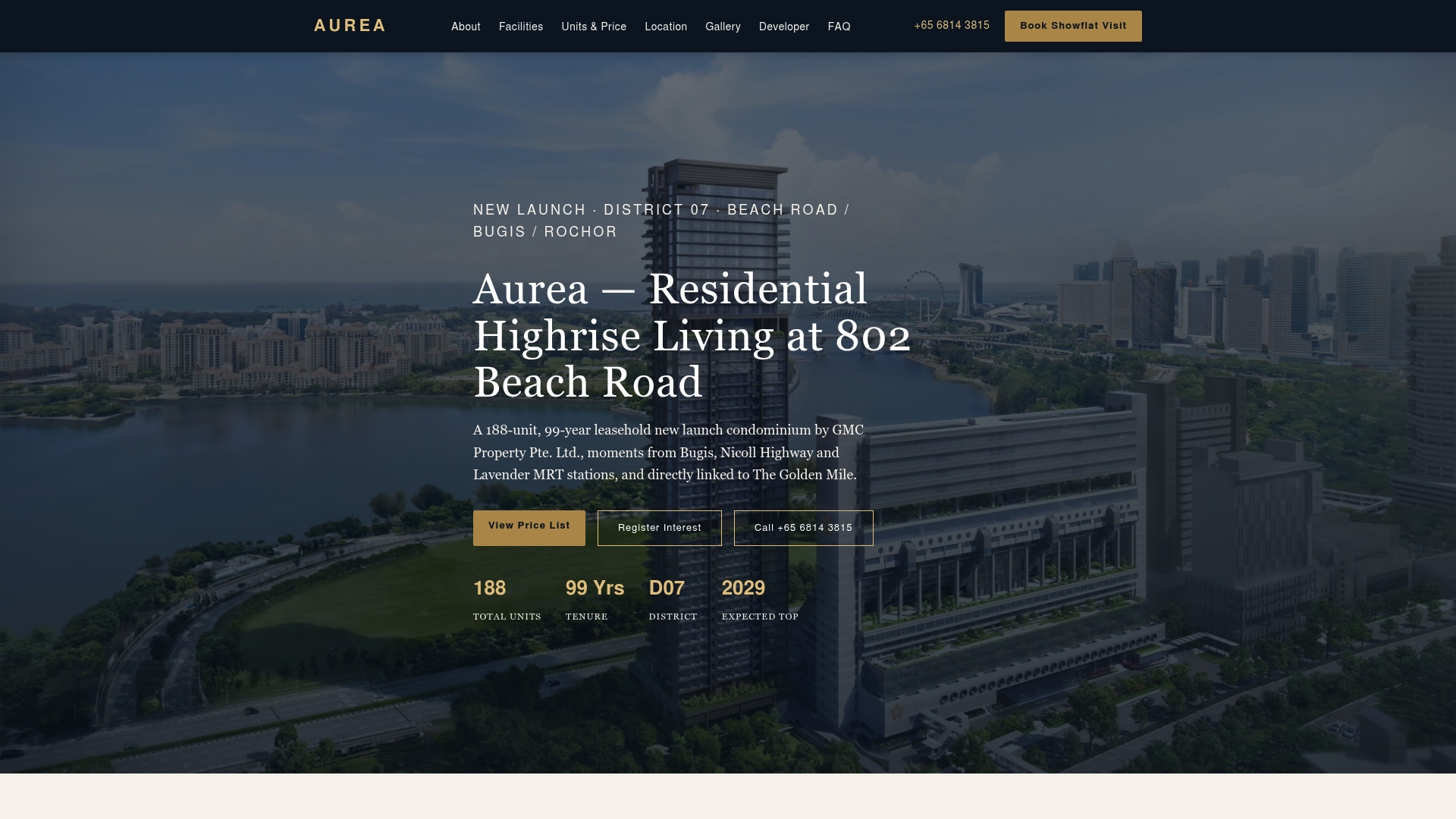
- Review current unit plans and pricing for 2 Bedroom, 3 Bedroom, 4 Bedroom, 4 Bedroom Premium, 5 Bedroom and Penthouse layouts directly on the project page.
- Check showflat visit schedules and register interest through the official landing page.
- Cross-reference comparable listings and supply data on platforms like Haio if you want a second data point before deciding.
This article is general information, not a substitute for advice from a qualified financial advisor. Consult a qualified financial professional about your own circumstances before acting on anything here.
FAQ
What are some upcoming new launches in Singapore?
Singapore's new launch pipeline changes each quarter as developers release GLS sites and en-bloc redevelopments. Checking URA's confirmed GLS list and a current market outlook gives the clearest sense of what is coming before you shortlist a project.
What are the remaining units in the new launch condos in 2026?
Remaining unit counts change weekly as developers release phases, so the only reliable source is the specific project's sales team or landing page rather than a general figure. For Aurea, current availability across its unit types is listed directly on the project page.
What are some new apartments being launched in Singapore?
New apartment launches span private condominiums and executive condominiums across different districts each year, with details released closer to each project's sales launch date. Aurea at 802 Beach Road is one current example, offering two to five-bedroom units and penthouses near multiple MRT stations.
Which EC launches are expected in 2026?
Executive condominium launches depend on confirmed GLS sites released by URA, and the specific sites and timing vary by year. URA's supply pipeline release is the primary reference for confirmed EC sites and expected launch windows.
How much stamp duty will I pay on a new launch unit in Singapore?
Buyer's Stamp Duty follows marginal bands from 1% to 6% depending on the purchase price, and Additional Buyer's Stamp Duty depends on your buyer profile, ranging from 20% for a citizen's second property up to 65% for entities. The exact bands and rates are published by IRAS and should be checked against your specific purchase price before booking.