
For most Singapore homebuyers, a north–south facing stack is the safer bet for a cooler, glare-free home. It cuts down on the harshest afternoon sun, opens the door to better cross-ventilation, and tends to hold its value at resale. That said, the cardinal label alone doesn't guarantee comfort.
Two things drive the north–south preference. First, units facing this way avoid the low, blazing sun that hammers east and west facades in the late afternoon, which is the hottest part of a Singapore day. Second, when a unit's windows and balcony openings line up with the island's prevailing wind patterns, north–south orientation ranks among the top features buyers look for in Singapore condo stacks, because it supports genuine cross-breeze rather than a single stagnant intake.
Here's the catch:
- Floor level changes everything. A north-facing unit on the 8th floor, boxed in by a taller block next door, can run hotter and darker than a south-facing unit on the 30th floor with a clear line of sight.
- Stack position within the building matters more than the compass reading on the floor plan.
- Layout, window size, and balcony depth can amplify or dampen whatever the orientation gives you.
Key Takeaways
North–south facing units generally deliver cooler, better-ventilated Singapore homes, but floor level, surrounding blocks, and glazing choices often decide whether that advantage actually shows up in daily comfort.
| Point | Details |
|---|---|
| North–south is the safer default | It avoids the harshest low-angle afternoon sun that east and west facings absorb twice a year. |
| Sun direction shifts seasonally | Afternoon sun leans north-west from March to September and south-west from September to March. |
| Floor level can override facing | A high-floor north unit can outperform a low-floor south unit boxed in by taller blocks. |
| Ask for the stack diagram | Stack position within a tower often matters more than the building's overall facing label. |
| Aurea spreads amenities across four levels | Its layout and link bridge to The Golden Mile support cooler, flexible living beyond a single unit's facing. |
This article is general information, not a substitute for advice from a qualified financial advisor. Consult a qualified financial professional about your own circumstances before acting on anything here.
Table of Contents
- Why Orientation Matters in Singapore's Tropical Climate
- When Does the Sun Actually Hit Your Unit?
- The Real Benefits of North–South Facing Units
- North vs. South Facing: What About East and West?
- Floor Level, Stacks and Glazing Change the Math
- How to Check a Unit's Real Exposure Before You Buy
- Fixing Heat and Glare After You've Moved In
- How Aurea's Design Responds to Orientation and Comfort
- What Buyers Should Actually Prioritize First
- See Aurea's Approach to Cooler, Livable City Living
- Sources
Why Orientation Matters in Singapore's Tropical Climate
Singapore doesn't really have a cool season. Temperatures sit in a narrow, humid band all year, and that changes what "good orientation" even means compared to temperate countries where architects design homes to catch the sun in winter. Here, the goal flips: keep the sun out, not in.
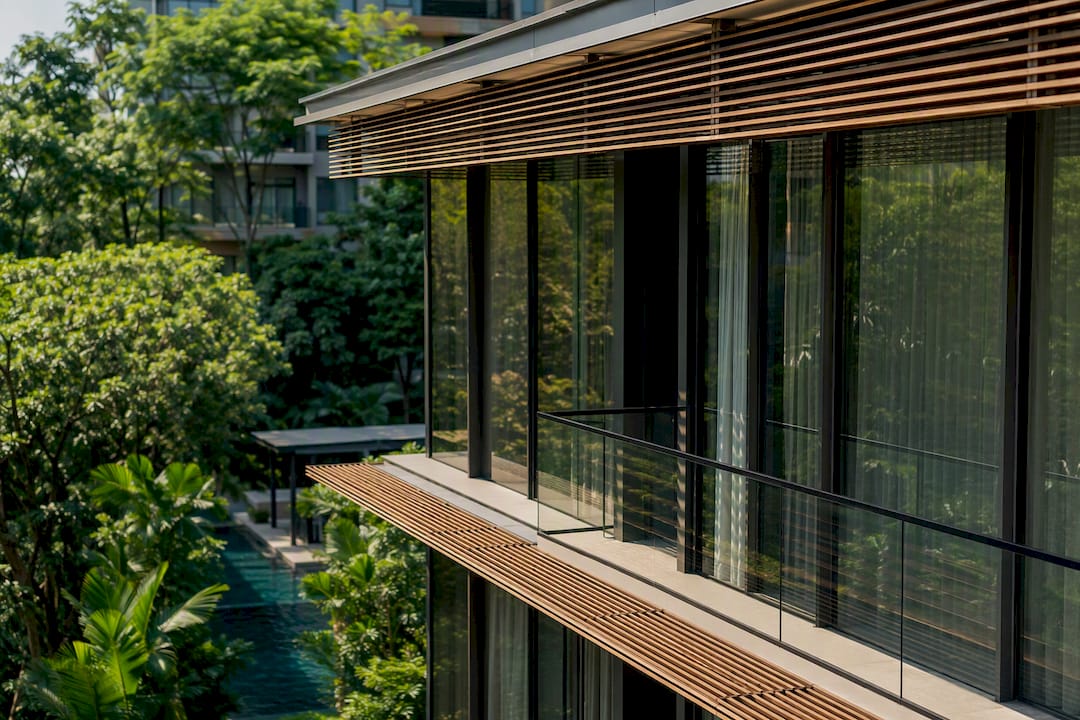
The core comfort problem in a Singapore condo isn't cold, it's overheating, paired with humidity that makes heat feel worse than the thermometer suggests. Every degree of unwanted heat gain becomes air-conditioning load, which becomes a utility bill. That is why orientation, shading, and ventilation get so much attention from buyers who actually live in their units rather than just admire the floor plan.
Because Singapore sits almost on the equator, the sun's path is unusually symmetrical and steep. Unlike cities further from the equator, where the sun swings dramatically low in winter, Singapore's sun stays high overhead most of the year, and its apparent east-to-west path shifts north or south of straight overhead depending on the season. In practical terms, this means the sun that lands on your unit in the afternoon isn't always coming from the same quadrant. Around March through September, afternoon sun tends to lean toward the north-west. From September through March, it swings toward the south-west. That seasonal drift is exactly why buyers should assess exposure by when and where afternoon sun actually falls, rather than relying on the cardinal label printed on a floor plan.
Wind adds another layer. Singapore's prevailing breezes shift with the monsoon calendar, generally blowing from the northeast between December and March and from the southwest between June and September. A unit that can catch cross-ventilation from these directions, meaning it has openings on two opposing or adjacent faces, cools noticeably faster once you switch off the air conditioner. Singapore's Meteorological Service tracks these year-round high-humidity, high-temperature patterns that make natural airflow such a valuable design feature rather than a nice-to-have.
When Does the Sun Actually Hit Your Unit?
Knowing the season matters more than most buyers realize. A unit that looks shaded during a morning viewing in July might bake in direct light every afternoon come November, once the sun's angle shifts south.
Here's the rough seasonal breakdown for Singapore:
- March to September: Afternoon sun leans toward the north-west quadrant, meaning north-facing and west-facing rooms catch more late-day heat during this stretch.
- September to March: The pattern flips, and afternoon sun shifts toward the south-west, putting more heat load on south-facing and west-facing rooms.
- Year-round: West-facing rooms catch some version of afternoon heat in both halves of the year, which is why west remains the toughest orientation regardless of season.
North–south facing stacks fare better through both halves of this cycle because neither face takes the brunt of the low afternoon sun the way east or west does. East–west stacks, by contrast, get squeezed twice: hot mornings on one side, hot afternoons on the other, with the intensity simply migrating between north-west and south-west as the months turn.
Two quick scenarios show how this plays out in real buildings. A high-floor north-facing unit, say on the 25th story with nothing blocking it, gets soft, workable daylight most of the day and only mild late-afternoon warmth during the north-west sun months. Compare that to a low-floor south-facing unit on the 6th floor, hemmed in by a neighboring block: it might dodge direct sun for large stretches of the day simply because the building next door blocks it, but when the sun does reach it during the September to March stretch, heat builds up fast with nowhere for the warm air to escape. Floor height and surrounding structures can swing the outcome as much as the facing itself does.
The Real Benefits of North–South Facing Units
The preference for north–south stacks in Singapore isn't a superstition passed around by property agents. It comes down to four measurable outcomes: less heat, less glare, better airflow, and stronger resale appeal.
Lower afternoon heat means fewer hours running the air conditioner. Units that dodge the harsh late-day sun don't accumulate the same thermal load in walls, glass, and furniture, so the compressor doesn't have to work as hard once evening hits. Over a full year, that adds up to a noticeably smaller electricity bill compared to an equivalent west-facing unit with the same floor plan.
Consistent, indirect light works better for people who spend all day at home. North-facing rooms in particular get a steady, even glow without the sharp glare that makes it hard to see a laptop screen at 3 p.m. Tapscape's guide to Singapore condo orientation notes that north-facing units deliver softer, more consistent natural light well suited to home offices, while south-facing units get stronger direct sun that's manageable with the right shading but less forgiving without it.
Cross-ventilation only works if the geometry lines up. A north–south stack with openings on both faces has a genuine shot at catching the shifting monsoon winds described earlier, letting air move through the unit instead of pooling in one corner near a single window.
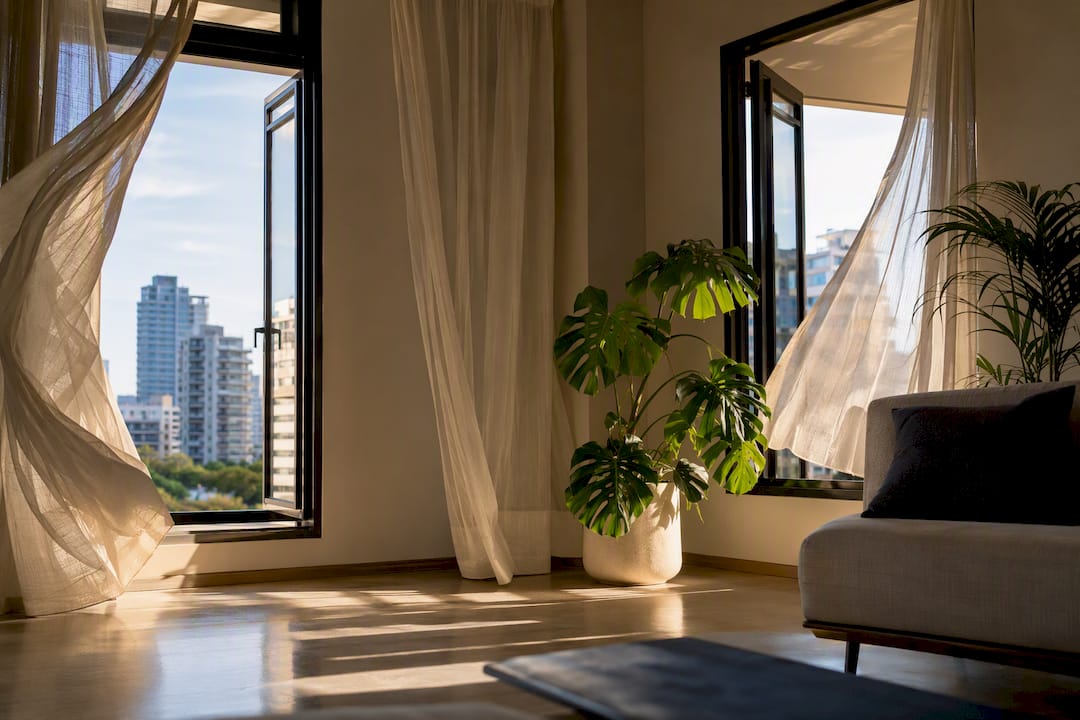
Market demand tends to follow comfort. Industry observers in Singapore's resale and rental market note that north–south stacks often draw stronger tenant and buyer interest than comparable east–west units in the same development, likely because word travels fast about which stacks run hot.
Pro Tip: Ask the agent which specific stack number you're viewing, not just the general facing. Two units with the same "south-facing" label in the same building can have completely different heat profiles depending on which block or stack they sit in relative to the sun's path.
North vs. South Facing: What About East and West?
Not every buyer can land a north–south unit, and honestly, not every buyer should prioritize it above everything else. Sometimes the view, the price, or the layout on offer justifies a different facing. Here's how the other two cardinal options actually behave.
- East-facing: Catches the gentler morning sun, which works well for bedrooms since the room warms up naturally around wake-up time and cools through the rest of the day. Afternoons stay comparatively mild, making east a reasonable second choice for light sleepers who want brightness without evening heat.
- West-facing: Carries the highest overheating risk of any orientation in Singapore. The sun sits low and direct in the sky during late afternoon, exactly the hours when a household is home from work and running the air conditioner hardest. Floor-to-ceiling glazing on a west face without external shading is a recipe for a hot living room every single day of the year.
- South-facing: Gets a lot of daylight, which some buyers value for a bright, airy feel, but that light comes with real heat that needs proper shading, tinted glazing, or deep balconies to stay livable through the afternoon.
None of this means east or west units are bad buys. A west-facing unit with a spectacular skyline view, a lower price per square foot, or deep balcony overhangs built into the facade might beat a plain north-facing unit on overall value. The compass direction is one input, not the whole decision.
Floor Level, Stacks and Glazing Change the Math
The cardinal direction printed on a floor plan is a starting point, not a verdict. Four other variables usually decide how a unit actually feels day to day.
- Floor height. Higher floors generally get more direct light and fewer obstructions, but they also lose the shade a lower floor might get from a neighboring block. A high-floor north-facing unit can outperform a low-floor south-facing unit boxed in by taller buildings nearby, simply because it has an unobstructed path for both light and airflow.
- Neighboring buildings and greenery. A dense cluster of taller towers nearby can shade a lower unit for much of the day, which sounds like a win until you realize it also blocks the breeze that would otherwise cool the unit naturally.
- Window size and glazing. Floor-to-ceiling glass looks stunning in a showflat, but it amplifies whatever the orientation is already doing. A west-facing unit with full-height glazing and no external shading heats up far faster than the same unit with smaller windows.
- Corner units and cross-aspect stacks. These often outperform simple single-facing units because they draw light and air from two directions at once, softening the extremes of whichever single cardinal direction dominates.
Stack position within a high-rise development is frequently more determinative of comfort than the building's overall front-facing orientation, which is exactly why asking for the specific stack diagram matters more than asking "is it north-facing?"
Pro Tip: If you're comparing a 3 bedroom condo layout against a smaller unit in the same building, check whether the living and dining areas sit on the more exposed face. A well-placed 3 bedroom condo layout puts bedrooms, not living rooms, on the hottest side, since bedrooms are used mostly at night.
How to Check a Unit's Real Exposure Before You Buy
Floor plans and marketing brochures rarely tell you how a unit actually feels at 4 p.m. in July. Here's a practical sequence to run through during a viewing.
- Pull up a compass app on your phone the moment you walk into the unit, and confirm which way each major window and balcony actually faces. Don't trust the brochure's arrow.
- Ask the agent directly which direction afternoon sun falls on that specific stack, not just the building as a whole, since stacks within the same tower can face slightly different angles.
- Request photos taken in the late afternoon, ideally between 2 and 5 p.m., rather than relying only on the bright, flattering midday shots most listings use.
- Check for a clear cross-breeze path by seeing whether windows or balcony doors sit on two different faces of the unit, not just one wall.
- Ask about height restrictions and upcoming developments nearby. A clear view today can vanish in three years if an adjacent plot gets approved for a taller tower.
A few smaller checks round this out:
- Look at the position of the living room and kitchen relative to the most exposed face, since these rooms see the most daytime use.
- Ask whether the unit is a corner stack or a straight single-aspect layout, since corner units usually ventilate better.
- Confirm the floor level against neighboring block heights on the site plan, not just the marketing render.
Pro Tip: Bring a small battery-powered fan or ask to stand near an open window for a few minutes during the viewing. If you can't feel any air movement on a day with normal wind, the unit likely won't ventilate well even on breezier days.
Fixing Heat and Glare After You've Moved In
Not every exposure problem is a dealbreaker, and several common issues have straightforward fixes once you own the unit.
External shading solves more heat problems than internal blinds do, because it blocks sun before it ever reaches the glass. Deep overhangs, awnings, or louvered screens on a west or south-facing balcony can cut a meaningful amount of heat gain, while internal curtains only trap heat that has already entered the room.
Heat-reflective or low-emissivity window film is one of the most cost-effective retrofits available to condo owners, since it can be installed without structural changes and works on existing glass. Detailed breakdowns of UV-blocking window film options show how much heat and glare reduction is possible without replacing the glazing itself, though tropical humidity means some films perform better than others over time, so it's worth asking a local installer about tropical-rated products specifically.
Planting helps more than most buyers expect. Vertical greenery on a balcony or a few well-placed potted trees can shade a window and cool the air through evaporation before it enters the room.
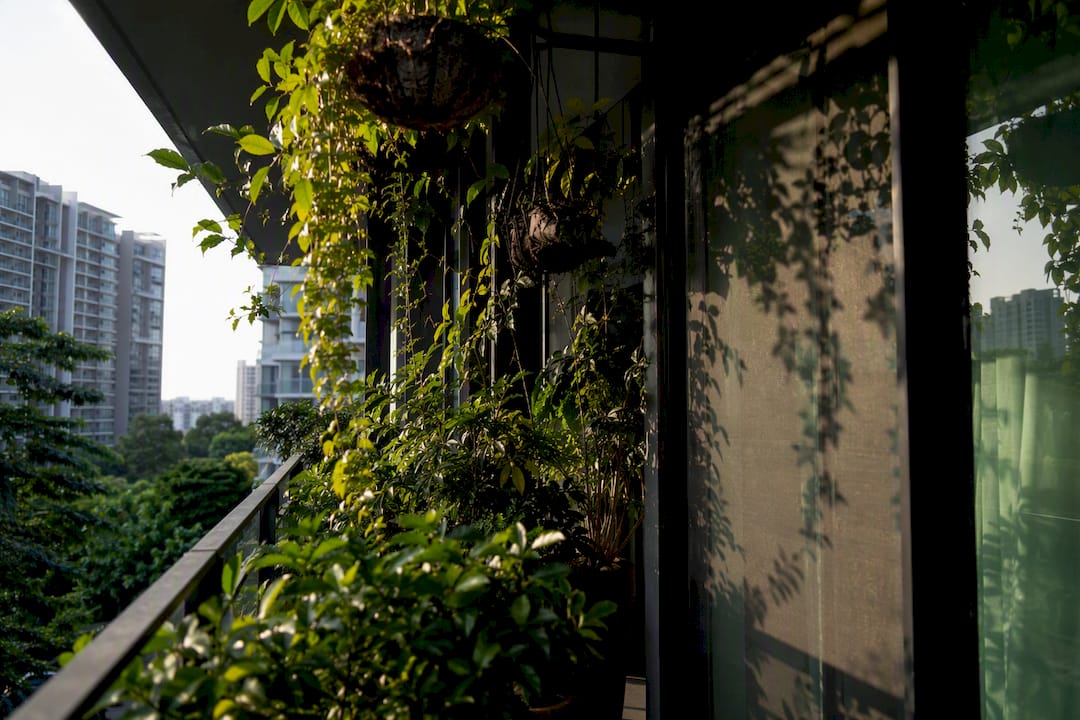
Ventilation upgrades round out the list. A well-placed ceiling fan moves far more air per dollar than most people assume, and small layout tweaks, like keeping a bedroom door cracked to let air pass through, can turn a stagnant unit into one with real cross-breeze.
Pro Tip: If you're setting up a home office in a smaller unit, check out ideas for carving out a private workspace without sealing off the room entirely, which keeps daylight and airflow moving through even after you add a partition.
How Aurea's Design Responds to Orientation and Comfort
A development's layout decisions matter just as much as any single unit's compass reading. Aurea, the residential highrise at 802 Beach Road, was designed with 188 units across 2 to 5 bedroom layouts, plus two penthouses, and its amenity program spreads across four separate levels rather than stacking everything into one exposed rooftop deck.
That kind of vertical spread does two practical things for occupant comfort:
- It distributes shared facilities, including pools, clubhouses, and fitness areas, across multiple levels, which can reduce heat buildup that comes from concentrating glass-heavy amenity decks in a single exposed block.
- The link bridge connecting to The Golden Mile gives residents indoor access to additional leisure and retail space without stepping into direct outdoor heat, a genuinely useful feature during Singapore's hottest afternoon hours.
Diverse unit layouts across the development, from smaller two-bedroom homes to larger family units and penthouses, also mean buyers aren't locked into one single-aspect facing. Readers who want floor plan and stack specifics can check the latest Aurea project updates directly for current availability and layout details.
What Buyers Should Actually Prioritize First
The conventional advice, chase a north–south facing unit above all else, gets the direction right but the emphasis wrong. Floor level and stack position typically move the needle more than the cardinal label ever will. A north-facing unit on a low floor jammed between two taller blocks can perform worse than a south-facing unit forty floors up with an open view and a strong cross-breeze.
Where most buyers go wrong is treating the facing on the floor plan as the final word, instead of the starting question. The floor plan tells you the direction; it says nothing about what's blocking the light, how deep the balcony overhang runs, or whether the windows on the opposite wall actually align for airflow. Ask for the stack diagram before you ask about the facing.
On the cultural side, some buyers weigh feng shui alongside these practical factors, and there's no harm in that as a personal preference. Just don't let it override what a compass app and an afternoon site visit tell you about actual heat and airflow. Comfort is measurable. Luck isn't.
See Aurea's Approach to Cooler, Livable City Living
Aurea sits at 802 Beach Road with multiple units spanning from smaller to larger bedroom layouts, including penthouses, all designed around the same comfort priorities this guide just walked through: reducing heat load, supporting natural airflow, and giving residents flexible amenity space that doesn't depend on one exposed rooftop deck.
The development's four-level amenity program and its link bridge to The Golden Mile give residents indoor-outdoor options that ease the pressure any single unit's orientation puts on daily comfort. If you're weighing floor level, stack position, and layout the way this guide recommends, the most useful next step is to look at the actual stack plans and current unit availability yourself. Visit the Aurea project page for layouts, floor levels, and estimated completion details, and reach out to get specifics on which stacks best match the comfort priorities that matter to you.
Sources
- Discover the Ultimate Guide to Choosing the Perfect House Facing Direction for Your Ideal Condo Stack in Singapore | Tapscape
- Passive design orientation guidance | YourHome
- Condo exposure guide: best direction for a condo to face | Best Calgary Homes