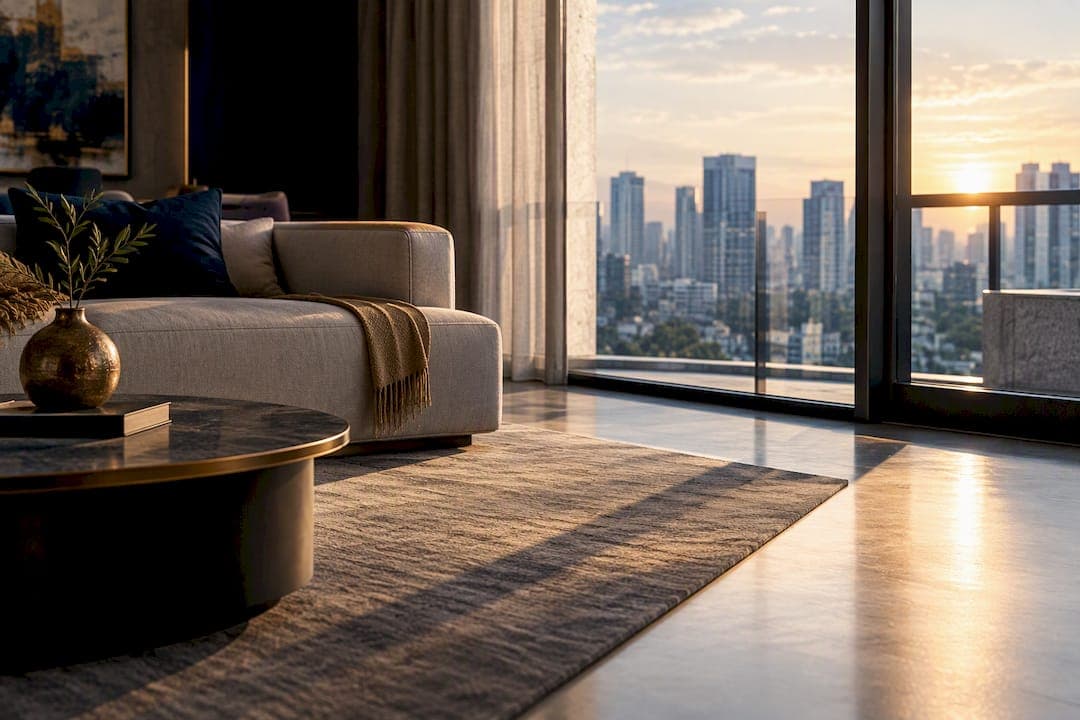
An east-facing unit is usually a smart pick in Singapore because it delivers gentle morning light and cooler afternoons compared with west-facing stacks. That said, the label only pays off if the bedrooms and living areas actually face east, and if the developer can back up its glazing and shading with real numbers. Orientation matters, but it's one factor among floor level, layout, and building envelope, so inspect the stack yourself and ask for technical specs before you sign anything.
TL;DR:
- East-facing units are most beneficial when the principal living areas and bedrooms actually face east, with proper glazing and shading specifications to enhance comfort.
- Sun angles in Singapore vary seasonally between NE and SE, so actual morning sunlight exposure changes throughout the year and must be verified through proper site inspection.
- Proper layout, building envelope quality, and window specifications like low SHGC and u-values are critical factors in ensuring thermal comfort and energy efficiency for east-facing units.
- Glare and heat reflections from nearby structures or reflective surfaces can cause discomfort in east-facing homes, making curtains and furniture placement essential considerations.
- Resale performance depends more on layout and location than orientation, so buyers should compare adjusted prices and actual living conditions rather than relying solely on "east-facing" labels.
Table of Contents
- What "East-Facing" Actually Means in Singapore and How Sun Angles Vary
- Pros of East-Facing Units for Singapore Buyers
- Cons and Practical Drawbacks of East-Facing Units
- Practical Viewing Checklist: How to Verify Stack Orientation and Lived Comfort
- Building Envelope, Glazing, Shading and BCA Green Mark: What to Demand From the Developer
- Lifestyle Fit and Resale Considerations for Singapore Buyers
- Applied Example: Documentation and Disclosures to Expect From a Developer
- Green Flags and Red Flags Worth Knowing Before You Sign
- How Aurea Fits an Orientation-Conscious Search
- Sources
- FAQ
What "East-Facing" Actually Means in Singapore and How Sun Angles Vary
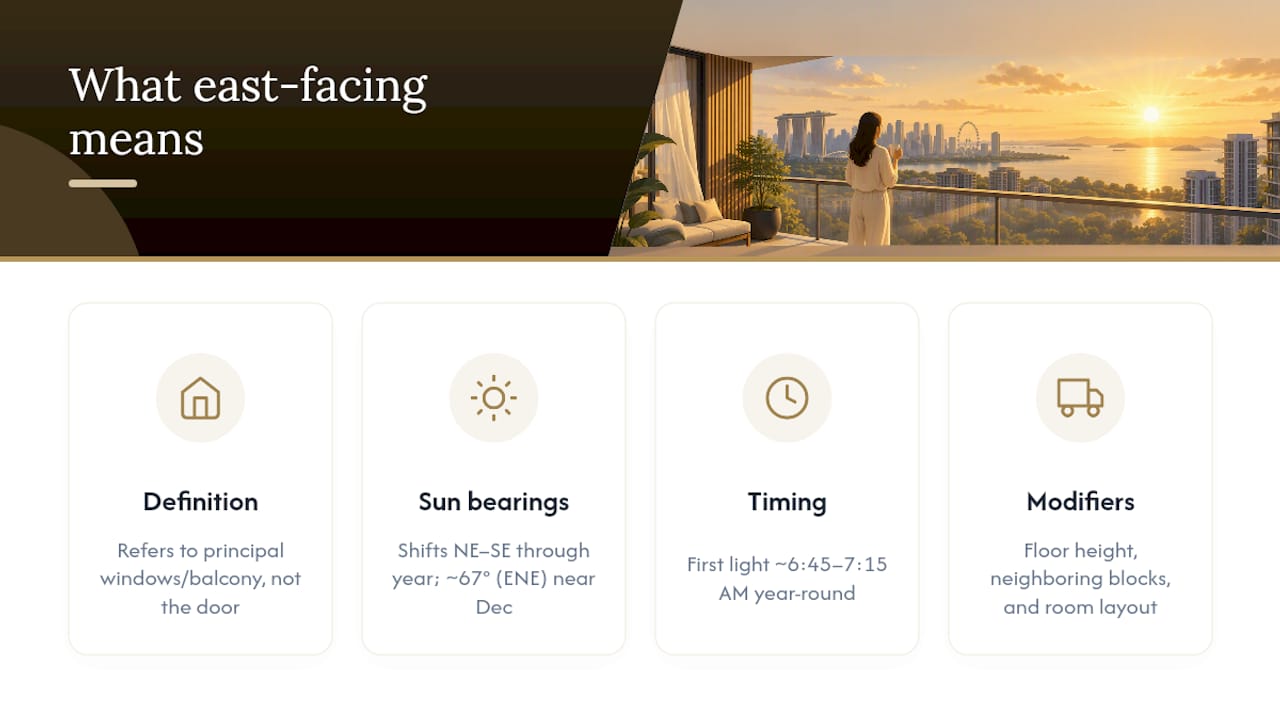
"East-facing" in a marketing brochure usually refers to the direction the principal windows, balcony, and main living spaces face. It has nothing to do with which way the front door points. A unit can have its entrance on the west side of a corridor while its living room and master bedroom windows open toward the east. This distinction trips up more buyers than you'd expect. Sales staff sometimes describe a unit as "east-facing" based on the entrance lobby orientation shown on a site plan, when the actual glazed façade that catches the morning sun faces a completely different direction.
The sun doesn't rise due east every day of the year in Singapore. Because of the country's near-equatorial position, sunrise bearing shifts between roughly northeast and southeast across the seasons, with true east occurring close to the equinoxes, according to Meteorological Service Singapore. Sunrise/sunset tables put the bearing near 67 degrees, or ENE, close to the December solstice, per Timeanddate. That shift matters because a unit that gets almost no direct sun in June might catch a noticeably stronger beam through the same window in December.
Timing barely changes, though. Singapore sits close enough to the equator that sunrise and sunset times vary by only a matter of minutes across the year, so you're generally looking at first light hitting an east-facing façade sometime between 6:45 AM and 7:15 AM year round.
Surrounding buildings complicate the picture further. A unit on the 4th floor facing east might sit in the shadow of a neighboring block until mid-morning, while the same stack on the 25th floor gets unobstructed light an hour earlier. Layout matters too: a unit where the kitchen and bathroom face east while the living room faces north won't feel like a classic "morning sun" home at all, regardless of what the compass says. Treat the orientation label as a starting point, not a guarantee of how the unit will actually feel to live in.
Pros of East-Facing Units for Singapore Buyers
The case for east-facing units in Singapore's climate is genuinely strong, provided the layout cooperates. Morning sun arrives with less intensity than the harsh, low-angle afternoon glare that hits west-facing units, and it fades by late morning rather than building through the hottest part of the day.
Here's what buyers consistently gain from a well laid out east-facing unit:
- Softer natural light in the morning that makes living rooms and kitchens feel warm rather than harsh, and works well for plants that need morning sun without afternoon scorch.
- Cooler afternoons and evenings, since the sun has moved away from the east façade by early afternoon, which matters most for stacks without heavy west-facing glazing.
- Lower cooling load in the afternoon, when Singapore's heat typically peaks between 2 PM and 4 PM, meaning your air conditioning doesn't have to fight direct solar gain during the hottest stretch of the day.
- A natural fit for early risers, home-based workers who use the morning for focused tasks, and anyone who values a bright start to the day without needing to switch on lights.
The energy angle deserves a closer look. NEA has confirmed that 2024 tied as Singapore's warmest year on record, with rising mean temperatures making thermal comfort a bigger part of the buying decision than it was a decade ago. An east-facing unit doesn't dodge the heat entirely, but it avoids stacking direct solar gain onto the hottest hours of the afternoon, which is when air-conditioning systems already work hardest.
Who benefits most from this orientation? Early risers and morning people get the clearest win, since they're awake and using the space exactly when the light is at its best. Home-based professionals who work morning hours in a study or living room facing east get natural daylight without glare-heavy afternoon sun bouncing off a laptop screen. Plant owners also do well here, since many indoor plants prefer the gentler intensity of morning light over the harsher UV load of a west-facing window.
Pro Tip: Ask the agent which specific rooms face east, not just the unit as a whole. An "east-facing" 3-bedroom unit where only the utility room catches the morning sun is not the same product as one where the living room and master bedroom both do.
Cons and Practical Drawbacks of East-Facing Units
The biggest complaint from east-facing unit owners isn't heat. It's glare, particularly in bedrooms. If your bedroom window faces east and you're a light sleeper, a 6:45 AM sunrise cutting through thin curtains can wake you well before your alarm does. This is a common enough issue that window treatment has become a standard fix, and blackout curtains are one of the more effective and affordable mitigations available to condo owners.

Screen glare is the other underrated issue. A home office desk or a television positioned against an east-facing window can become genuinely unusable for an hour or two each morning without blinds or a repositioned setup.
A few other drawbacks worth weighing before you commit:
- Living rooms can feel dimmer in the afternoon and evening, which is exactly when most households actually use them, so factor in artificial lighting needs for the hours you're home.
- Mislabeling is a real risk. Some listings describe orientation by entrance direction rather than principal window direction, so always verify with the site plan rather than trusting the brochure description alone.
- Nearby massing changes everything. A blank, light-colored wall on an adjacent block can reflect additional heat and glare into an east-facing unit, while a taller neighboring tower can block morning sun entirely on lower floors.
- Reflective surfaces on podium roofs or car park structures below your unit can bounce unexpected light and heat upward, something brochures never mention.
None of this makes east-facing units a poor choice. It just means the label alone tells you less than you'd think, and the practical fix for most of these issues (blinds, curtain choice, furniture placement) is cheap relative to the price of the unit itself.
Practical Viewing Checklist: How to Verify Stack Orientation and Lived Comfort
Confirming orientation on paper is one thing. Confirming how it actually feels to live in the unit is another, and that only happens with a proper site visit.
- Schedule your viewing for the morning, ideally between 7 AM and 10 AM, since this is when an east-facing claim will either prove itself or fall apart in front of you.
- Bring a compass app and the stack/site plan. Stand in the living room and bedrooms and confirm which way the principal windows actually face, rather than relying on what the agent tells you.
- Check for glare directly on the bed and any desk or workspace. If direct sun hits where your head or your laptop screen would sit, note it as a line item for future blinds or curtain budgeting.
- Test ventilation if the unit is unoccupied and windows can be opened. Open multiple windows or doors at once to see whether air actually moves through the unit, since orientation alone doesn't guarantee cross-ventilation, particularly during Singapore's monsoon transition periods.
- Ask for the developer's sun-study diagrams, glazing specifications (u-value and SHGC), and shading details. If these aren't available at the showflat, ask when they will be.
- Request any Green Mark documentation tied to the specific block or stack, not just a generic project-level certification summary.
- For new launches where the block isn't built yet, compare the advertised stack against the surrounding site plan and ask the developer for orientation-specific technical information rather than accepting general marketing language about "morning sun" or "unblocked views."
A second visit in the afternoon, if you can arrange it, tells you just as much by contrast. You'll see exactly how the living areas behave once the sun has moved off the east façade, and whether the space needs supplemental lighting earlier than you'd expect.
| What to bring | What it tells you |
|---|---|
| Compass app | Confirms actual window orientation versus brochure claims |
| Stack/site plan | Shows surrounding block massing and potential shading |
| Morning viewing slot | Reveals real glare exposure in bedrooms and work areas |
| List of technical questions | Signals whether the developer has real data or just marketing copy |
For a broader measurement approach beyond orientation, a showflat checklist covering URA, OneMap, and REALIS data helps you cross-check unit size, surrounding plot details, and transaction history before you commit. If you're weighing an east-facing stack against a west-facing alternative in the same project, the checks worth running at a 2 to 5 PM viewing make a useful comparison exercise, since seeing both time slots side by side clarifies which trade-off actually suits your routine.
Building Envelope, Glazing, Shading and BCA Green Mark: What to Demand From the Developer
Orientation is only half the comfort equation. The other half is how well the building envelope manages heat and light once the sun hits it, and this is where a well-detailed east-facing unit can outperform a poorly detailed south-facing one.
The BCA Green Mark scheme awards points for thermal insulation, cool paint finishes, and window-to-wall ratio (WWR) treatments specifically on east and west-facing external walls, since these are the façades most exposed to direct low-angle sun. A high WWR without adequate glazing performance essentially turns a living room window into a greenhouse pane during peak sun hours. A well-managed WWR paired with proper glazing keeps daylight high while capping heat gain, which is the whole point of the Green Mark daylighting and envelope criteria.
Glazing specifications are worth learning even if you're not an engineer. Double glazing and low-emissivity (low-e) coatings reduce solar heat gain while still letting daylight through, which can meaningfully cut air-conditioning run time in east-facing living spaces, based on Green Mark's own envelope guidance. Ask specifically for the solar heat gain coefficient (SHGC) and u-value of the glazing used on the east façade. Lower SHGC values mean less heat passes through the glass; lower u-values mean less heat transfers through the material overall.
Shading strategy matters just as much as the glass itself. Look for these features when comparing projects:
- Brise-soleil or sun-breaker fins on east-facing façades that cut direct glare without blocking daylight entirely.
- Deep balconies or overhangs that shade lower floors from steep morning sun angles.
- Vertical greenery or planter screens, which some newer Singapore developments use to soften heat gain on exposed walls.
- Reflective or cool-paint external finishes, which reduce how much heat the building's own surface absorbs and radiates back.
Rising mean temperatures documented in Singapore's Third National Climate Change Study point to more very-hot days ahead, which is exactly why shading and glazing quality deserve more weight in a 2026 buying decision than they might have gotten a decade ago. Before you commit, ask the developer for the WWR figure on your specific stack, the u-value and SHGC of the installed glazing, sun-study diagrams for the block, the façade shading plan, and any Green Mark assessment report tied to the actual building rather than a generic project summary. If you're also considering acoustic performance alongside thermal comfort, double glazing that addresses Singapore's 57 dB noise threshold often solves both problems with a single upgrade.
Lifestyle Fit and Resale Considerations for Singapore Buyers
Orientation should match how you actually live, not how a floor plan looks on paper. If your household is up and moving by 6:30 AM, an east-facing living room and kitchen make breakfast and morning routines noticeably more pleasant. If you work long hours and only really use your home from early evening onward, that same east-facing living room will already be dim by the time you walk in, and the orientation advantage barely registers in your daily experience.
Resale value tells a more nuanced story than most brochures suggest. Floor level, layout efficiency, price quantum relative to comparable units, and developer track record consistently move resale numbers more than orientation alone does. A well laid out, mid-floor east-facing unit in a strong project will typically outsell a high-floor south-facing unit with an awkward layout, because buyers are shopping for livability first and compass direction second.
A few practical guardrails worth applying before you commit to a price:
- Compare layout-adjusted and view-adjusted prices across units in the same project rather than paying a premium purely for the orientation label.
- Factor in long-term thermal comfort, since climate projections suggest shading and glazing quality will matter more, not less, over a typical 10 to 15 year hold period.
- Weigh your actual daily schedule against the orientation before assuming "morning sun" is automatically a selling point for your specific routine.
- Treat orientation as a tiebreaker, not a primary decision driver, when two otherwise comparable units are on the table.
If layout flexibility across a project matters to your decision, it's worth reviewing how 3-bedroom layouts are typically configured to see how room placement within a stack can shift which spaces actually catch the morning light you're paying for.
Applied Example: Documentation and Disclosures to Expect From a Developer
Good developer documentation should tell you more than a sales brochure ever will. Aurea, a 188-unit residential project at 802 Beach Road developed by GMC Property Pte. Ltd., illustrates the kind of technical detail worth requesting regardless of which project you're considering. Aurea's project information covers unit types from 2 to 5 bedrooms plus two penthouses, giving buyers a range of layouts to match against orientation preferences within the same development.
The project also includes resort-style amenities spread across four levels, along with a link bridge connecting directly to The Golden Mile, features that matter for lifestyle fit alongside orientation when you're comparing how a unit's location and layout serve your daily routine. When developers publish this level of detail upfront, it saves buyers from having to chase down basic facts during a showflat visit.
Beyond the project page, developer-affiliated resources can go further into orientation-specific guidance than most sales conversations do. Aurea's blog, for instance, covers north-south facing condo advantages in detail, offering useful comparative context for buyers weighing east-facing stacks against other orientations in the same climate. A separate post on viewing checks for west-facing condos demonstrates the kind of orientation-specific viewing guidance every buyer should be able to find, regardless of the project.
Use resources like these as a benchmark. If a developer can't produce comparable sun studies, glazing specs, or orientation guidance when you ask, that's worth noting before you sign anything.
Green Flags and Red Flags Worth Knowing Before You Sign
After going through the climate data, the Green Mark criteria, and dozens of viewing scenarios, three green flags consistently separate a good east-facing purchase from a lucky guess. First, the developer proactively shares sun-study diagrams rather than making you ask twice. Second, the glazing and shading specs are documented with real numbers, not just words like "energy efficient" on a brochure. Third, the layout itself puts living spaces, not just a utility room, on the east-facing side.
The red flags matter just as much. A developer who can't or won't produce glazing or sun-study data when asked directly is telling you something. A bedroom with a low-angle sunrise window and no blinds included in the fit-out is a problem you'll be solving out of pocket within the first month. And a neighboring blank west-facing wall, especially a light-colored one, can quietly turn a "cool morning unit" into an afternoon heat trap through reflected glare.
None of this is complicated once you know what to look for. It just requires asking questions that go beyond "which way does it face."
— Velisa
How Aurea Fits an Orientation-Conscious Search
If you're comparing stacks and asking developers for real glazing numbers rather than brochure language, some projects are built around giving you exactly that kind of detail upfront. The project offers a range of bedroom layouts and penthouses across many units, with resort-style amenities spread over multiple levels and link bridge access to a nearby development, letting you weigh layout and orientation options within a single development rather than hunting across multiple projects.
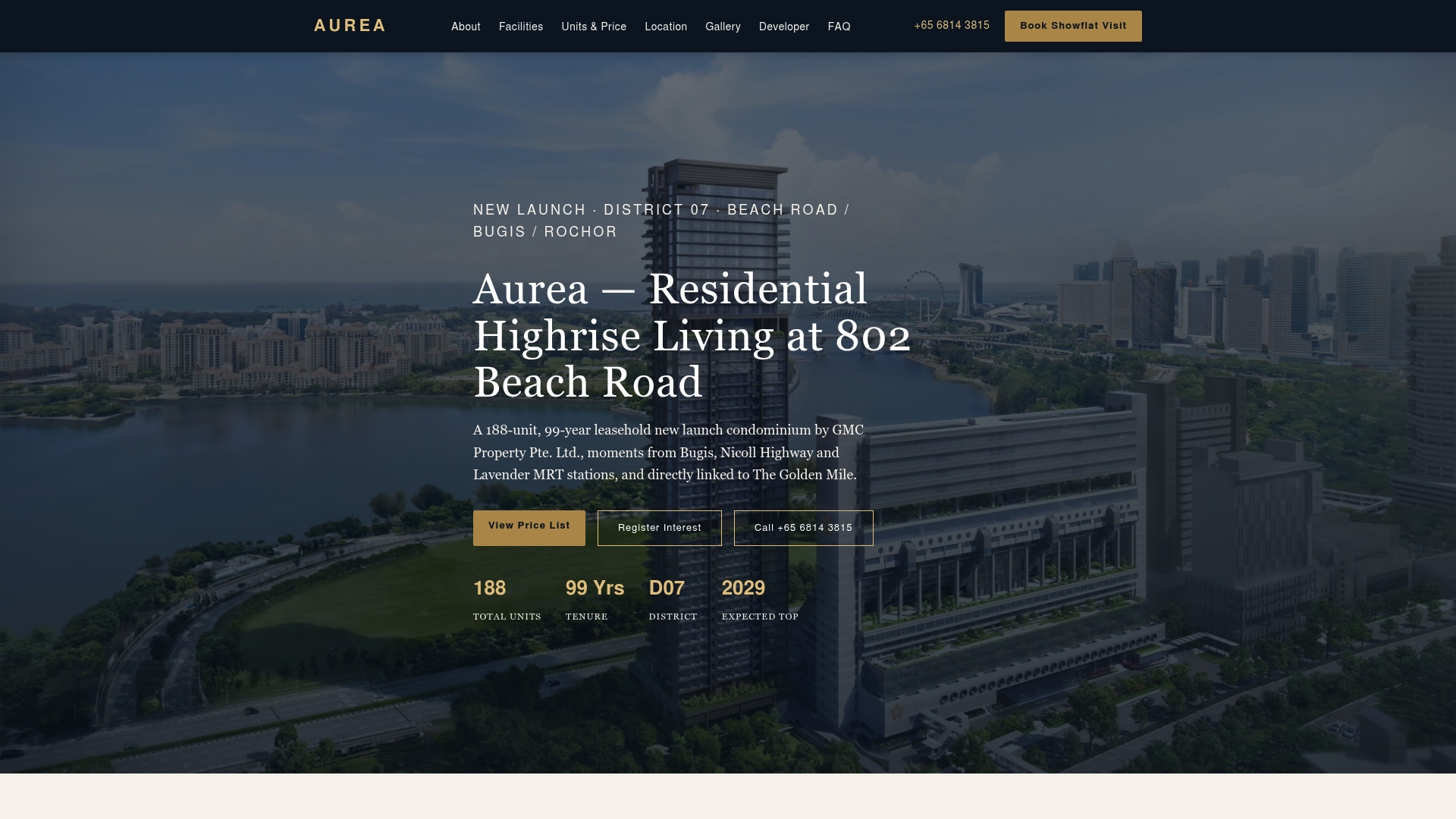
Unit pricing currently runs from $1,770,000 to $2,075,800 for 2-bedroom layouts, $2,639,900 to $3,058,600 for 3-bedroom units, and $4,080,510 to $4,512,990 for 4-bedroom units, with 4-bedroom premium and 5-bedroom and penthouse pricing available on request. If you want to see how a specific stack's orientation plays out in person, the practical next step is to request the technical pack, including sun-study diagrams and glazing specifications, and book a showflat viewing timed for the morning hours discussed above. You can also register your interest for upcoming preview slots through Registertoday, a straightforward way to get on the list before viewing dates fill up.
Sources
Before finalizing any decision, cross-check the claims in this guide against primary sources.
- 2024 is Singapore's warmest year on record
- Climate of Singapore - Weather Information Portal
- Green Mark e-Planning Portal
- Sunrise and sunset times in Singapore
- Blackout curtains (Yoru Interior)
This article is general information, not a substitute for advice from a qualified financial advisor. Consult a qualified financial professional about your own circumstances before acting on anything here.
FAQ
Is an East-Facing Apartment Good or Bad in Singapore?
It's generally a good choice for buyers who value morning light and cooler afternoons, provided the principal living spaces genuinely face east and the glazing and shading are properly specified. The label alone isn't enough; verify the actual room layout and building envelope details before deciding.
Which Direction Is Best for a Condo to Face in Singapore?
There's no single best direction for every buyer, since it depends on daily routine, layout, and building envelope quality. East-facing units suit early risers and cooler afternoons, north-south facing units tend to avoid the harshest direct sun altogether, and west-facing units carry the most afternoon heat exposure without strong shading.
What Does It Mean When an Apartment Is East-Facing?
It means the principal windows, balcony, or main living spaces are oriented toward the east, not necessarily the entrance door. Because Singapore's sunrise bearing shifts seasonally between northeast and southeast, per Meteorological Service Singapore, actual morning sun exposure varies slightly across the year rather than staying fixed.
Is It Good to Have a House Facing Southeast in Singapore?
A southeast-facing unit typically gets a blend of the morning light benefits of east-facing units with slightly different seasonal sun angles, since Singapore's sunrise bearing moves toward the southeast during part of the year. It's a reasonable orientation for buyers who want morning brightness without the most extreme low-angle glare, though the same rules apply: check the actual room layout and glazing before assuming comfort based on direction alone.
Do East-Facing Units Sell Better Than Other Orientations?
Orientation alone rarely drives resale value as strongly as floor level, layout efficiency, and price relative to comparable units in the same project. East-facing units can sell well when paired with a favorable layout and good building envelope specs, but buyers should compare layout-adjusted pricing rather than paying a premium for orientation alone.