Yes, double glazing is worth it for most Singapore condo owners fighting traffic roar, MRT rumble, or afternoon heat gain, but the right fix depends on your unit and your MCST's rules. Three approaches work in practice: full acoustic-grade window replacement, retrofit secondary glazing, and interior magnetic acrylic retrofits. Expect somewhere between a noticeable dent in noise and a genuinely quiet room, depending on which one you pick and how well it's installed.
TL;DR:
- Retrofitting through magnetic acrylic or secondary glazing offers a lower-cost, interior-only solution, often avoiding complex façade approval processes.
- Full replacement windows, especially laminated types, can achieve noise reductions of up to 45 dB but cost between S$1,200 and S$2,500 per window.
- The effectiveness of double glazing depends on gaps, pane asymmetry, and lamination, but it does not address low-frequency noise or sound through walls and floors.
- On-site noise measurement and specific glass specifications are essential for accurate results, with contractors offering pre- and post-installation decibel checks.
- For best results, consider the building's orientation, level, and external noise sources before upgrading, as these factors significantly influence acoustic performance.
Table of Contents
- How Do Local Double-Glazing Suppliers Compare?
- What Do These Systems Actually Do to Sound and Heat?
- What Does Installation Cost and How Long Does It Take?
- Do You Need MCST or HDB Approval First?
- How Do You Choose the Right Contractor?
- What Does the Local Evidence Actually Support?
- Should You Fix the Windows or Just Buy Somewhere Quieter?
- Considering a Development Built With Acoustic Comfort in Mind?
- Sources
- FAQ
How Do Local Double-Glazing Suppliers Compare?
Every supplier in this market claims some version of "quieter, cooler, done fast." The real differences show up in installation disruption, permit complexity, and what happens to your exterior façade.
| Supplier / Solution | Typical Cost Range | Claimed dB Reduction | Best For | Permit Complexity |
|---|---|---|---|---|
| Magnetite (interior magnetic acrylic retrofit) | Lower cost retrofit tier | 50–70% reduction claimed | Minimal façade change, faster approvals | Low, interior only |
| Ho Ho (premium 18 mm acoustic assemblies) | Mid to upper tier, full replacement | Strong reduction with thermally broken frames | Units where exterior change is approved | Moderate, HDB assistance offered |
| Pang Giap (heavy-duty laminated assemblies) | Mid to upper tier, full replacement | High reduction for heavy exposure | Units on major roads or near expressways | Moderate |
| House of Glass (custom IGU solutions) | Mid tier, custom quoted | Depends on chosen spec | Custom projects needing tailored specs | Moderate |
| Fortified (acoustic line, pre-install dB testing) | S$1,200 to S$2,500 per window for standard replacement | Assessed on-site before quoting | Owners wanting an assessment-first approach | Moderate, BCA registered |
Fortified and similar full-replacement suppliers land in the S$1,200 to S$2,500 per window band for standard aluminium double-glazed replacement, with retrofit and secondary glazing options priced lower. That's the ballpark to budget against, not a fixed number, since window size and frame type move it around.
A few things fall out of this table once you sit with it:
- If your MCST is slow or fussy about façade changes, retrofit and secondary glazing avoid that fight entirely.
- Sliding doors and larger panels generally cost more per unit because they need heavier frames and more glass.
- Units facing an expressway or a major arterial road usually need the thicker laminated assemblies, not the standard configuration.
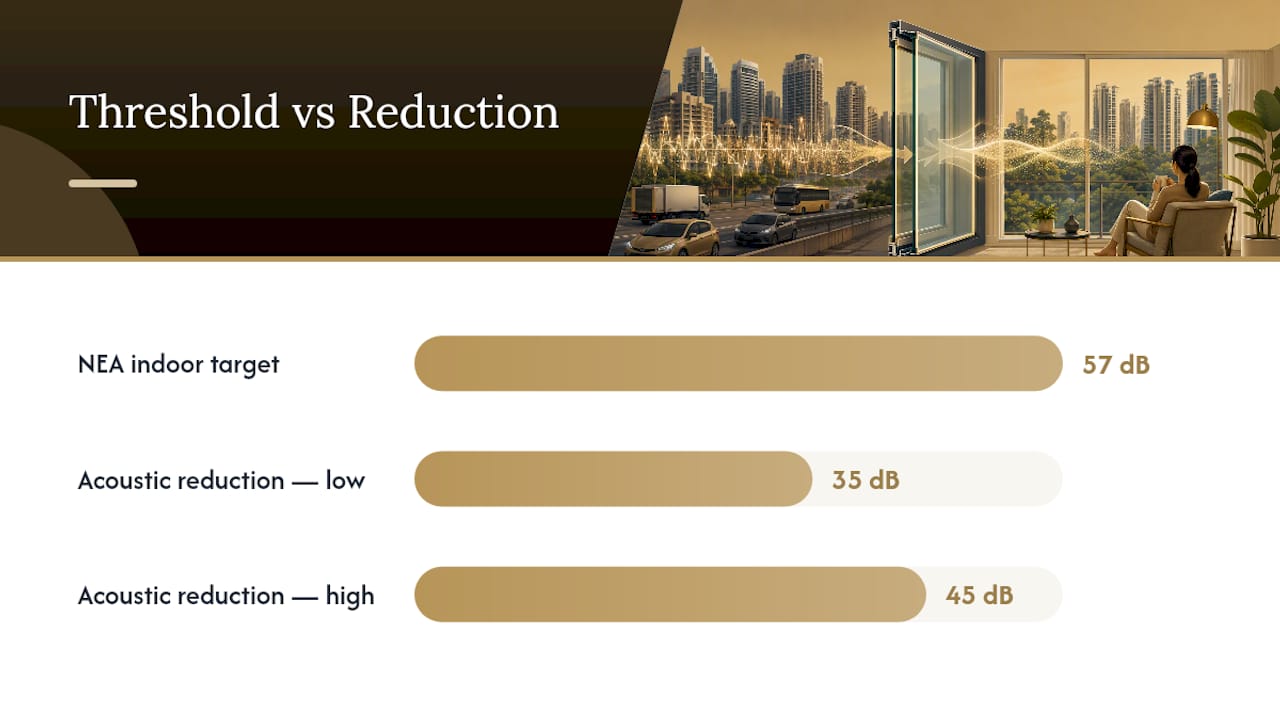
The 57 dB benchmark: the National Environment Agency sets 57 dB as the recommended average indoor noise level for residential spaces. That gap is the whole reason retrofit exists as an industry.
What Do These Systems Actually Do to Sound and Heat?
Double glazing works by trapping a gap of air (or gas) between two panes, and that gap is doing most of the acoustic work, not the glass thickness alone. A wider gap, an asymmetric pane thickness (one pane thicker than the other), and a laminated interlayer all interrupt sound waves more effectively than two identical thin panes sitting close together.
Performance varies by approach. Professional acoustic-grade systems reach the 35 to 45 dB range NEA references. Magnetite's magnetic acrylic retrofit claims a 50 to 70% noise reduction, which is a meaningful cut, but it's measured differently than an absolute dB figure, so don't treat the two claims as directly comparable. Basic single-pane glass reduces roughly 10 dB, which explains why a lot of older condo units feel loud no matter how thick the curtains are.
Here's where expectations need adjusting:
- Low-frequency noise (heavy trucks, MRT vibration through the structure, tunnel resonance) travels through the building itself, not just the air gap, so glazing alone won't solve it.
- Units directly above an MRT line or near a flyover often need laminated glass or a triple-layer approach to get meaningfully quieter.
- No glazing system fixes noise transmitted through walls, floors, or a poorly sealed door.
Pro Tip: A contractor who quotes you a thickness number ("18mm glass!") without offering an on-site dB measurement is selling a spec sheet, not a solution. Ask for a before-and-after decibel reading in your actual room.
What Does Installation Cost and How Long Does It Take?
Full replacement windows generally run in the S$1,200 to S$2,500 per window range for standard sizes, with retrofit and secondary glazing options coming in lower. Larger sliding doors, laminated glass upgrades, and argon-filled units all push the price up. Frame material matters too. Thermally broken aluminum frames cost more than standard extrusions but perform noticeably better on both heat and sound.
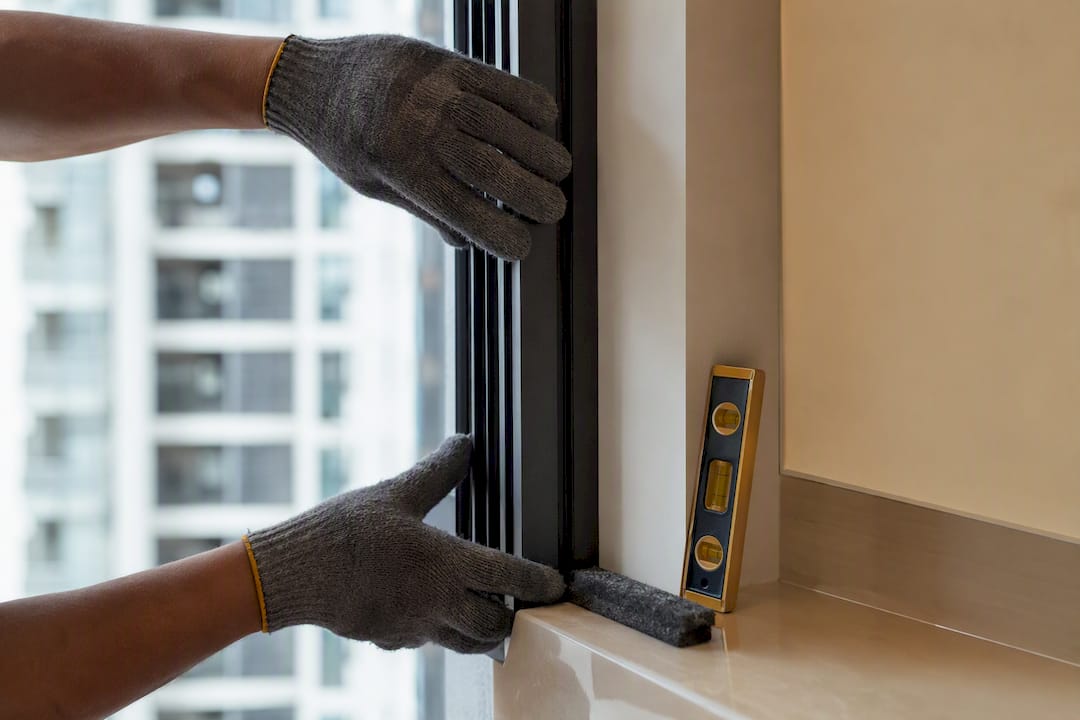
If your budget is tight, a retrofit or secondary glazing layer delivers a real improvement without matching full replacement dollar for dollar.
The typical process runs like this:
- Site survey and dB measurement, usually free with reputable installers.
- Quote and glass stack-up proposal, matched to your noise source and budget.
- Production lead time of roughly 3 to 4 weeks from confirmed order to delivery.
- Installation day, typically half a day to a full day per window depending on size and access.
- Final inspection and, with some suppliers, a post-install dB check to confirm the improvement.
Do You Need MCST or HDB Approval First?
Full window replacement that changes the exterior profile, frame color, or glass appearance usually needs MCST approval for condos, since it alters common property or the building's façade. Interior retrofits, like magnetic acrylic panels or secondary glazing mounted inside the existing frame, often sidestep this entirely because nothing changes on the outside.
Contractors handling this regularly will typically supply:
- Product specification sheets and technical drawings for the MCST committee.
- Proof of contractor registration (BCA or equivalent) where required.
- A written scope showing exactly what changes, if anything, on the exterior.
Ask upfront whether the contractor handles the paperwork themselves or leaves it to you. That single question can shift your timeline by weeks, since a contractor experienced with MCST and HDB permit processes already knows what the committee wants to see.
How Do You Choose the Right Contractor?
Start with the noise source, not the product brochure. Figure out whether you're dealing with road traffic, an MRT line, construction, or all three, then get an on-site dB reading before comparing quotes.
- Identify the noise source and measure current indoor dB with the contractor present.
- Decide retrofit versus full replacement based on your MCST rules and budget ceiling.
- Set a realistic budget range and lead time expectation before you start calling suppliers.
- Ask each contractor for a pre and post-installation dB measurement commitment in writing.
- Request the exact glass stack-up (pane thickness, gap width, laminated or not) and frame profile.
- Confirm warranty terms and prior MCST or HDB approval experience.
Watch for red flags: vague percentage claims with no measurement offered, no physical sample or spec sheet, no written warranty, or hesitation when you ask for references from past condo jobs.
Pro Tip: Get the dB commitment in the written quote, not a verbal promise. "We'll measure before and after" means nothing if it's not on the invoice.
What Does the Local Evidence Actually Support?
NEA's 57 dB indoor threshold is the baseline worth measuring your unit against, and professional acoustic systems reaching 35 to 45 dB reduction can get a loud unit close to that target. Noise in Singapore's dense urban core is rarely solved by one fix alone, glazing is one part of a broader strategy.
Should You Fix the Windows or Just Buy Somewhere Quieter?
Retrofitting makes sense when you already own the unit and love the location. But if you're still shopping, orientation and floor level matter more than any glazing upgrade you'll add later. Check the showflat's glazing spec and visit during peak traffic hours before you sign anything.
— Velisa
Considering a Development Built With Acoustic Comfort in Mind?
Retrofitting an existing condo means living with drilling, MCST paperwork, and weeks of lead time before you get a quieter room. Aurea takes that variable off the table by letting you choose orientation and glazing specification before you ever own the problem.

A notable new residential development offers a range of units from 2 to 5 bedrooms plus penthouses, located near multiple MRT stations, with completion expected in the near future. Instead of researching decibel ratings after move-in, you can check north or south facing units and ask the sales team about glazing specifications during your viewing, before the decision is locked in. If interior noise mitigation still matters to you afterward, options like noise-reducing interior doors can supplement your unit's existing glazing.
Visit the Aurea landing page to review current unit layouts, orientation options, and available floors, and bring your questions about acoustic performance straight to the sales team at your next viewing.
FAQ
How Much Should Double Glazing Cost in Singapore?
Standard double-glazed window replacement typically runs S$1,200 to S$2,500 per window, while retrofit and secondary glazing options usually cost less per unit.
How Expensive Is It to Double Glaze a Whole Condo Unit?
It depends entirely on the number and size of windows and whether you choose full replacement or a lower-cost retrofit like magnetic acrylic panels, so get a per-window quote before estimating a whole-unit total.
How Can You Tell If a Window Is Already Double Glazed?
Look for two visible panes with a gap between them when viewed from an angle, or check for a spacer bar along the edge of the glass; a single sheet of glass with no visible gap is not double glazed.
Is Double Glazing a Good Investment for a Condo?
For units facing significant road, construction, or MRT noise, yes. Professional acoustic systems can cut noise by 35 to 45 dB against NEA's 57 dB recommended indoor threshold, which for a genuinely loud unit is the difference between livable and unbearable.
Does Choosing the Right Unit Matter More Than Retrofitting Later?
Orientation, floor level, and the building's own glazing spec matter enormously before you buy, since fixing a noisy unit after the fact always costs more in money and disruption than choosing well at the outset.