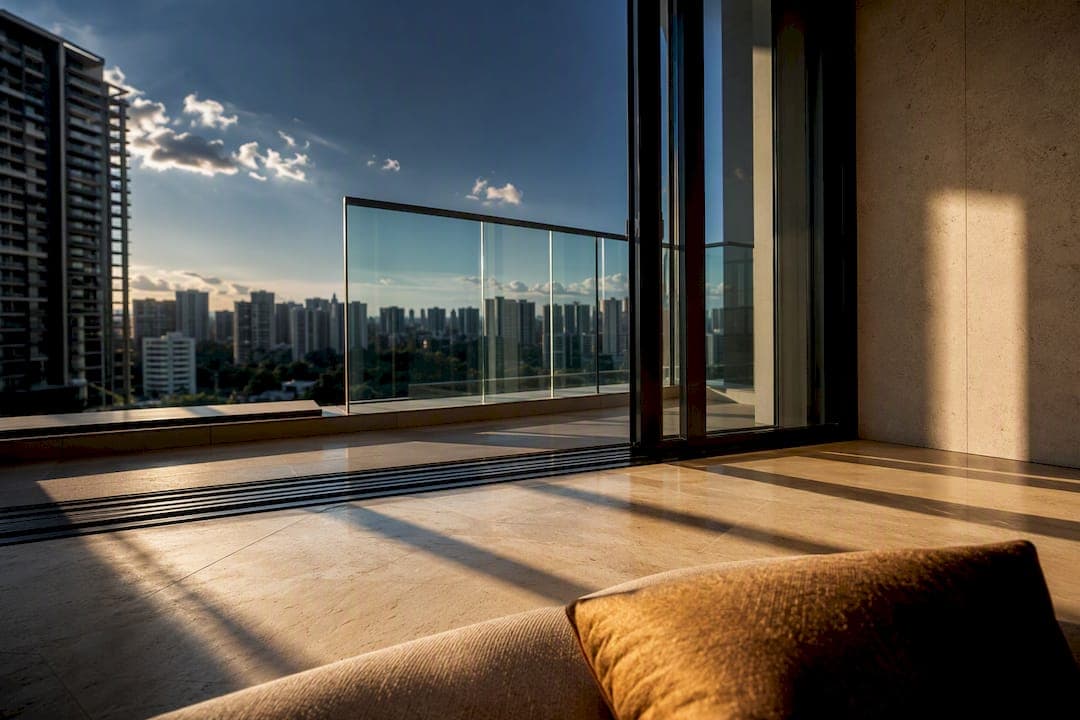
West sun is not an automatic dealbreaker in Singapore, but it does demand a closer look than most buyers give it. A unit with deep balconies, external shading, and decent cross-ventilation can handle the afternoon heat just fine. A unit with floor-to-ceiling glass on an unshaded west facade and no airflow is a different story. Before you sign anything, run the checklist below during a real afternoon viewing.
TL;DR:
- Deep balconies, shading features, and mature trees can significantly reduce heat gain and cooling costs in west-facing units.
- Full-height glass panels, large glazing areas, and unshaded facades dramatically increase heat absorption and prolong room warmth.
- Viewing during peak heat hours between 2pm and 5pm provides the most accurate assessment of a unit’s thermal comfort.
- Retrofits like external shading, window films, and cross ventilation can help but often require approval from the Owners' Corporation.
- Developers’ design choices, such as facade shading and glazing specifications, greatly influence a unit’s comfort and should be evaluated early.
Table of Contents
- What "West Sun" Means for a Singapore Condo Buyer
- How West-Facing Exposure Drives Up Heat and Cooling Costs
- Unit Assessment Checklist: What to Look for During Viewings and on Floor Plans
- Mitigation Measures That Actually Work in Singapore Condos
- Buyer Trade-Offs: Resale, Lifestyle, and a Simple Decision Rule
- What Developer-Grade Design Does Differently
- Aurea: A Development Built With Comfort in Mind
- A Practical Take on Comfort Versus Compass Direction
- Sources
What "West Sun" Means for a Singapore Condo Buyer
"West sun" refers to direct sunlight hitting west-facing rooms during the strongest part of the day, roughly from noon to 6pm. That six-hour stretch is when a unit absorbs the most solar radiation, and in a country that sits almost on the equator, the sun is intense enough to matter even through glass.
The exact angle shifts through the year. Because of the earth's axial tilt, the sun's path drifts between northwest and southwest depending on the season, so a unit that reads as "west facing" on a floor plan might catch more northwest sun in one stretch of the year and more southwest in another. That seasonal wobble is one reason two units on the same stack can feel noticeably different depending on which side of the block they sit on.
Singapore's tropical climate makes this worse than it would be almost anywhere else. Temperatures stay high and humid year round, and nights rarely cool down enough to reset a unit that spent the afternoon absorbing heat. Two things worth noting before you tour a unit:
- Afternoon sun in tropical climates carries more direct energy per hour than in temperate climates, even at the same clock time.
- High humidity reduces evaporative cooling efficiency, so a hot room tends to stay warm longer after sunset.
How West-Facing Exposure Drives Up Heat and Cooling Costs
Concrete does not just block heat, it stores it. A west-facing wall or balcony slab absorbs solar energy all afternoon, then releases it slowly into the room well after the sun sets. That is why a bedroom on the western side can still feel warm at 9pm even with the air conditioner off since sunset, an effect tied to thermal mass rather than any flaw in the unit itself.
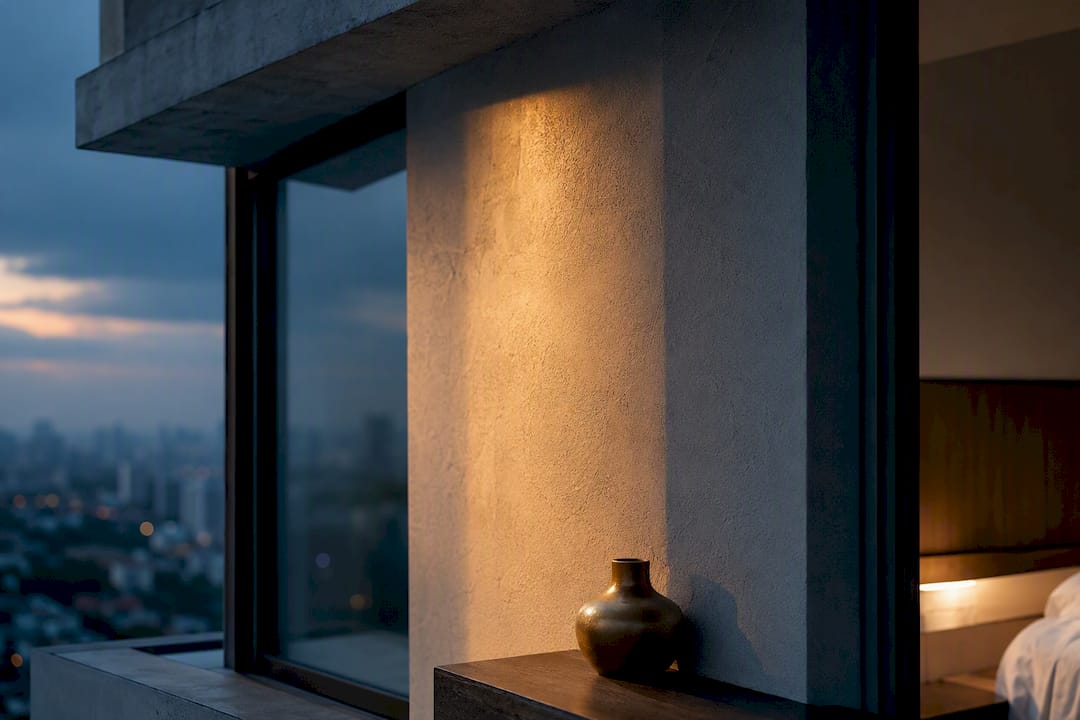
Property guides commonly note that north-south facing units in Singapore tend to be cooler than east-west units because they avoid the strongest afternoon sun exposure.
A few structural details decide how bad the effect gets on any given unit:
- Glazing area matters more than orientation alone. A small window on a west wall is a minor issue; a full-height glass panel is a heat magnet.
- Balcony depth and eave overhangs act as built-in sunshades, cutting how much direct light actually reaches the glass.
- A neighboring block, a row of mature trees, or even a parking structure across the road can shade a west unit for part of the afternoon and effectively cancel out the compass disadvantage.
- Recessed living areas behind a deep balcony absorb far less heat than a living room that sits flush with the facade.
The practical upshot is longer air conditioning runtime. If a unit's living areas and bedrooms both take direct afternoon sun with no shading, expect the AC to run harder and longer through the evening to bring the space back down to a comfortable temperature, which shows up as a real line item on the monthly utility bill.
Unit Assessment Checklist: What to Look for During Viewings and on Floor Plans
Orientation on a floor plan tells you almost nothing on its own. What matters is the combination of glazing, shading, and neighboring structures for that specific stack and floor. Work through this sequence at every viewing.
- Check window azimuth and room function. A west-facing kitchen or bathroom window matters far less than a west-facing master bedroom or living room, since those are the rooms you spend evening hours in.
- Measure balcony depth and eave overhang. A shallow or absent balcony gives the sun a straight shot at your glass doors for the entire afternoon.
- Look for shading from neighboring blocks or trees. Stand at the unit and trace what blocks the sun between 2pm and 6pm. A tower or mature canopy nearby can do more work than any orientation feature.
- Time your viewing for 2pm to 5pm. This is the window when the heat is most obvious. Local property analysts recommend viewing during this stretch specifically because morning or evening viewings hide the real problem.
- Feel the surfaces. Touch the balcony floor, the glass, and the wall closest to the sun. If they are noticeably warm to the touch during a viewing, that heat is going into the room after you move in too.
- Ask for facade drawings and glazing specs. Request the glazing's solar heat gain coefficient and the developer's recommended AC capacity for that unit type. These numbers tell you more than "north" or "west" ever will.
Pro Tip: Bring a phone thermometer app or a small handheld thermometer to a viewing. A ten-degree gap between a shaded corner and an exposed window wall is common, and it is the fastest way to prove or disprove an agent's claim that "it's not that bad."
Mitigation Measures That Actually Work in Singapore Condos
Some fixes are passive, some require power, and some need permission from the Owners' Corporation before you touch the facade at all.
On the passive side, deep balconies, external louvres or fins, and vertical greenery all cut solar gain before it ever reaches your glass. Reflective or light-colored external finishes help too, since darker surfaces absorb more heat and hold it longer.
For glazing, you generally choose between three options: low-e glass installed at construction, aftermarket solar films applied to existing windows, or simple internal blinds. Window films and external shading are the most commonly recommended retrofits for existing west-facing homes in Singapore, largely because they are cheaper than replacing glazing and do not sacrifice much natural light.
- Low-e glass: best long-term performance, but only an option at the developer stage, not a retrofit.
- Solar film: moderate cost, moderate heat reduction, minimal light loss.
- Internal blinds: cheapest, but they block heat only after it has already passed through the glass.
On ventilation, cross airflow between opposite-facing windows helps push out the heat that built up during the day rather than letting it linger overnight. For active cooling, size your AC unit for the actual heat load of a west-facing room, not a generic per-square-foot rule of thumb, and place the compressor and indoor unit to avoid recirculating heat from an already-hot balcony.
Pro Tip: Before installing external shading or film on a condo, check with the Owners' Corporation. Facade modifications on most Singapore condos need management approval, and some developments restrict changes to preserve a uniform exterior appearance.
Buyer Trade-Offs: Resale, Lifestyle, and a Simple Decision Rule
Singapore's resale market has a clear bias. Buyer guides and agents routinely point to north-south facing units as the safer, more liquid choice, since they avoid the harshest afternoon sun and tend to draw a wider pool of interested buyers at resale. A west-facing unit without mitigation features can sit on the market longer or get pushed on price.
That said, west sun is a genuine feature for some buyers. Sunset views over the water or skyline carry real value, and anyone serious about balcony plants often prefers the stronger afternoon light for growing conditions that a shaded north-south unit can't match.
A workable rule: only accept a west-facing unit if it clears at least two of these signals.
- Deep balcony or eave shading on the living areas and bedrooms
- Meaningful shading from a neighboring block or mature trees
- Low-e glazing or a manageable window-to-wall ratio
- Strong cross-ventilation between opposite facades
Cooling costs may increase on an unshaded west unit compared to a similarly sized north-south unit, largely due to longer AC runtime needed to offset stored heat from the thermal mass effect described earlier.
What Developer-Grade Design Does Differently
Individual buyers can retrofit blinds and films after the fact, but the biggest gains come from decisions made at the design stage, before a single unit is sold. Balcony depth, facade shading elements, and glazing specification are baked into the building long before any owner can influence them.
When you're comparing new launches, request the same technical details from every developer:
- Facade section drawings showing balcony and eave overhang depth
- Glazing solar heat gain coefficient (SHGC) or U-value ratings
- Recommended AC capacity per unit type and orientation
Aurea's layout planning at 802 Beach Road reflects this kind of stack-by-stack thinking rather than a one-size-fits-all facade. Ask any developer for the same paperwork before you commit.
Aurea: A Development Built With Comfort in Mind
If you're weighing a west-facing stack against the hassle of retrofitting shading and glazing yourself, a new launch designed with these factors already addressed is worth a look. Aurea is located in an urban area near multiple MRT stations and features units with resort-style amenities including pools, fitness decks, and children's facilities.
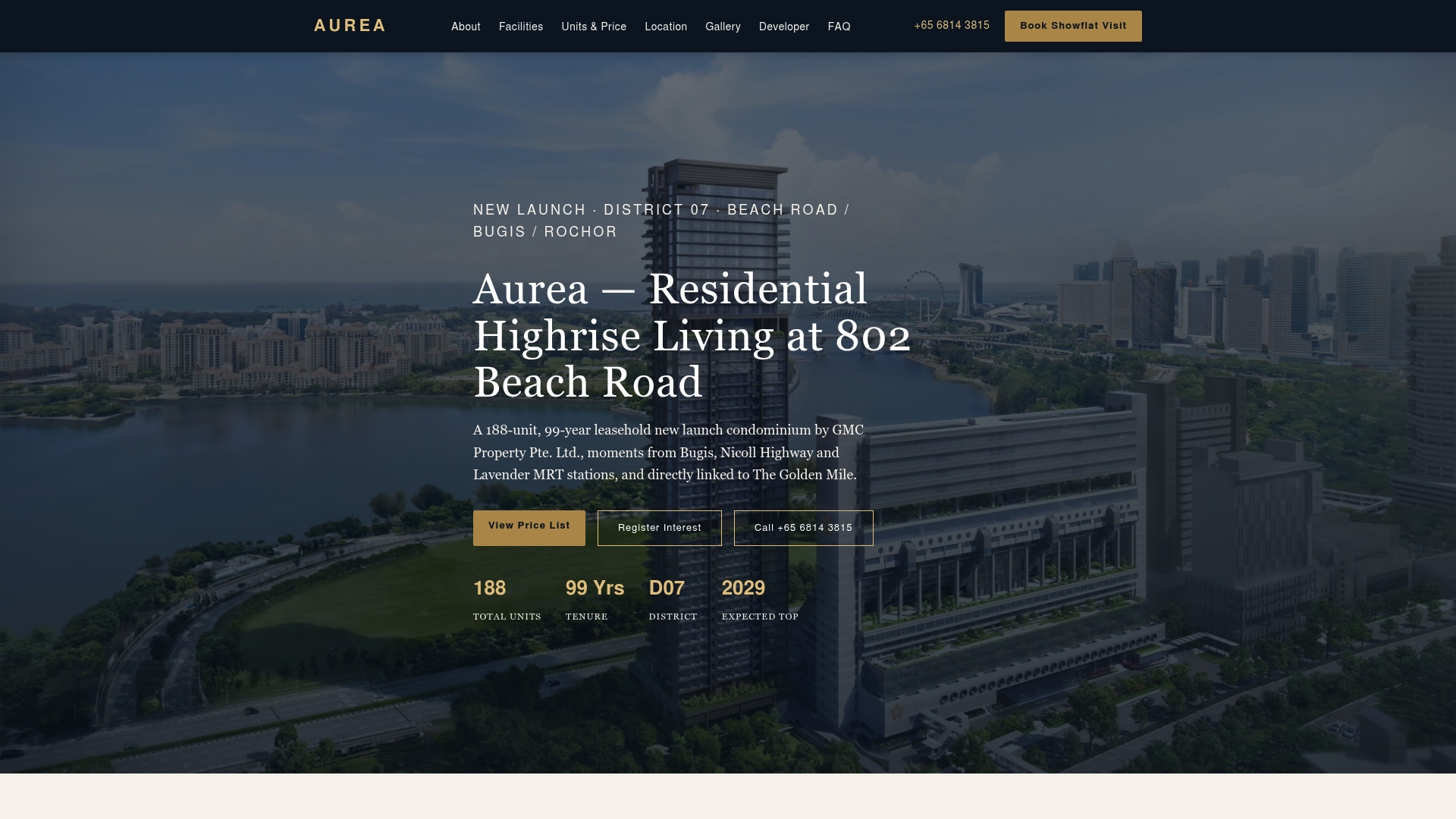
Rather than negotiating window film installation with an Owners' Corporation years down the line, you can ask upfront about facade orientation, glazing, and unit stack details before you buy. Visit the Aurea project page to review floor plans by orientation and book a viewing for the stack that fits your comfort priorities. This development is set for completion in the near future.
A Practical Take on Comfort Versus Compass Direction
Buyers fixate on compass direction because it's the easiest thing to check on a floor plan, but it's the least reliable predictor of comfort. A shaded, well-ventilated west unit beats an exposed north unit with poor airflow every time. Measure the actual conditions, compare the mitigation features on offer, and treat orientation as one input among several rather than a veto. If you want a shortcut through that process, start with the checklist above and ask developers the same technical questions you'd ask any contractor.
— Velisa
This article is general information, not a substitute for advice from a qualified financial advisor. Consult a qualified financial professional about your own circumstances before acting on anything here.
Sources
- Climate of Singapore — Meteorological Service Singapore
- Sun direction Singapore: What’s the best house facing direction for your home? — PropertyGuru
- Why avoid afternoon sun in Singapore HDB units — CompassOverlay
- Remedies for west-facing homes: 4 tips to beat the heat! — Monoloft