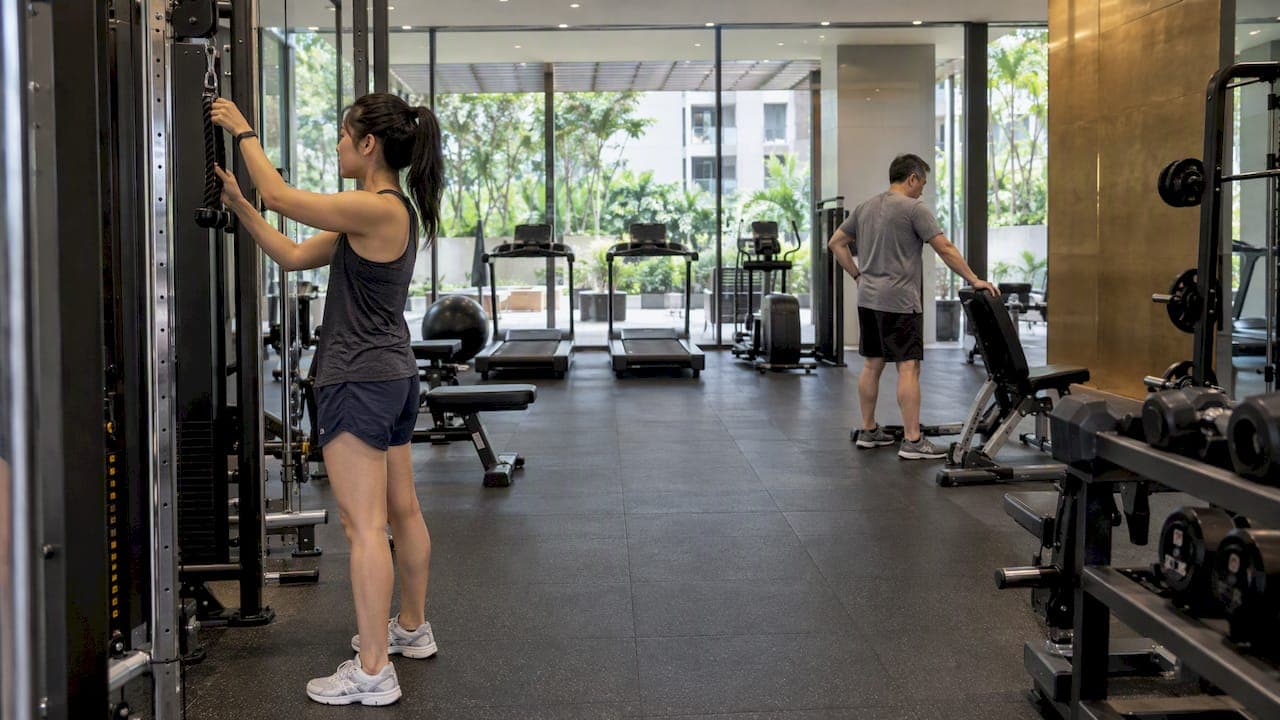
A condo clubhouse typically offers a pool, gym, BBQ pits, function rooms, a playground and sports courts. These facilities are worth paying for only when they are accessible, well maintained and match how your household actually lives, since every owner funds them through management and sinking fund contributions whether or not they ever book a slot.
TL;DR:
- Monthly service fees fund routine upkeep and major replacements through separate management and sinking funds, so inspect both budgets and special levy history.
- Compare facility capacity with unit count, since a small gym serving 600 homes may crowd at 7 AM while one serving 150 may not.
- Test booking systems and guest rules, then visit on weekday evenings or weekend mornings to check actual demand, hours, and access before committing.
- Request recent MCST minutes, fund budgets, planned works, governing rules, and levy records; inspect pool equipment, drainage, and lighting for signs of upkeep.
Table of Contents
- 1. Common clubhouse facilities and how offerings differ
- 2. Who pays and what fees cover: management fund, sinking fund and service fees
- 3. Are clubhouse facilities worth it? A practical buyer checklist
- 4. What to check at a viewing before you sign
- 5. How Aurea designs and manages resort-style facilities
- 6. Safety measures and emergency protocols within clubhouse facilities
- 7. Innovative or unique amenities and modern clubhouse trends
- A buyer's honest take on lifestyle versus ongoing cost
- Why Aurea suits buyers who want resort-style clubhouse living
- FAQ
- Sources
1. Common clubhouse facilities and how offerings differ
Behind the marketing render, a clubhouse is a set of shared rooms and outdoor spaces governed by the same rules as any other common property. Some are built for daily use, others for the occasional party, and the difference matters more than the brochure photo.
The resident lounge or function room usually works as a bookable space for birthdays, gatherings or small private events, often with a kitchenette and a rental deposit. Fitness offerings range from a modest corner with a few machines to a full gym with cardio and weight zones, sometimes paired with a yoga or spin studio. Pools vary just as widely: a 50 meter development might have one lap pool and a kids' wading pool, while a larger site adds a separate adult pool, spa pool and deck loungers. BBQ pits and pavilions are almost always booked in advance and shared across a limited number of slots per week.
Beyond those staples, many developments add:
- Tennis, basketball or badminton courts for residents who play regularly.
- Playgrounds and children's water play areas for younger families.
- Steam rooms, saunas or wellness decks for recovery after a workout.
- Function rooms with AV setups, sometimes marketed as a private cinema or karaoke room.
- Study pods or co-working corners for residents who work from home.
- Landscaped gardens, sky terraces or jogging paths that double as quiet common space.
Scale matters as much as variety. A single gym serving 600 units will feel crowded at 7 AM regardless of how good the equipment is, while the same gym in a 150 unit block rarely has a wait. Count the units against the facility size before assuming "more amenities" means "more usable amenities."
2. Who pays and what fees cover: management fund, sinking fund and service fees
Every clubhouse facility is paid for twice: once when it is built, and continuously afterward through contributions every owner makes regardless of personal use. Two funds split that ongoing cost, and understanding the split helps you judge whether a facility will still look good in ten years.
- The management fund covers routine, recurring costs: cleaning, lifeguards, pool chemicals, electricity and day-to-day repairs, as IRAS's guidance on management and sinking funds explains.
- The sinking fund is reserved for major works such as repainting, re-tiling a pool deck or replacing gym equipment and lift systems, as the same IRAS guidance sets out.
- Monthly service or conservancy fees fund both pots and continue whether you use the clubhouse weekly or never at all.
A development with a thin sinking fund is more likely to levy a special charge when the pool plant finally fails or the roof needs attention. Before assuming a facility is a bargain, ask for the latest MCST budget and any special-levy history. Our sinking fund basics guide breaks down typical contribution patterns and what a healthy SF budget should show.
3. Are clubhouse facilities worth it? A practical buyer checklist
The honest answer is that quantity rarely matters as much as quality, governance and access. A development with five underused courts and a leaking pool deck offers less real value than one with a well kept gym and a pool you'll actually use three times a week.
Run through this before weighing a facility's worth:
- Likely personal use: be honest about how often you'd realistically use each facility, not how often you imagine you would.
- Capacity versus unit count: a small gym serving hundreds of units means peak-hour crowding no matter how new the equipment is.
- Booking friction: some systems require advance slots days ahead; others are first-come, first-served.
- Guest policy: check limits on guest numbers and whether guests need to be registered in advance.
- Maintenance history: ask how often the pool, gym equipment or courts have needed repair in recent years.
Different buyers weigh these differently. A small family might care most about a wading pool and playground and barely touch the gym. An active household that plays tennis weekly will judge the whole purchase on whether a court is bookable on weekday evenings. An investor renting the unit out cares less about personal use and more about which amenities make the listing attractive to tenants.
Pro Tip: Pick the two or three facilities you'd genuinely use every week, and treat everything else as a bonus rather than a reason to pay more.
4. What to check at a viewing before you sign
A showflat tour tells you almost nothing about how a clubhouse actually functions day to day. The real test happens when you visit at the times you'd actually use the facilities and ask for paperwork most buyers skip.
On site, do this:
- Visit during a typical peak period, such as a weekday evening or weekend morning, to see real usage rather than a quiet midweek afternoon.
- Try the booking system yourself, whether it's an app, a physical sign-up sheet or a call to the management office.
- Check posted operating hours against your own schedule.
Before committing, request these documents:
- Recent MCST meeting minutes, which often reveal recurring complaints about facilities.
- The latest management fund and sinking fund budgets.
- Any planned major works and the special-levy history for the past few years.
- The specific by-laws covering booking rules, deposits and guest limits, which our MCST rules guide covers in detail.
Physically inspect the pool plant room if accessible, gym equipment condition, drainage around wet areas and lighting in corridors and stairwells. Our showflat checklist walks through the wider due-diligence steps worth pairing with this facility-specific review. For broader governance context, the Building and Construction Authority's strata management guides outline how common property like pools, gyms and playgrounds should be managed and what by-laws typically govern access.
5. How Aurea designs and manages resort-style facilities
At Aurea, we spread amenities across four levels rather than compressing everything into one rooftop deck, which is our way of giving pools, fitness areas and function spaces room to breathe instead of competing for the same few hundred square meters. Our link bridge to The Golden Mile adds a second layer of convenience beyond the facilities themselves, connecting residents to amenities outside the development without leaving covered walkways.
Like every new launch, Aurea's clubhouse and common property will move through a developer-to-MCST handover once the development is completed, a transition that shapes how facilities are governed and funded afterward.
- Our amenity mix spans multiple pools, fitness decks and children's facilities rather than a single shared pool and gym.
- The Building Maintenance and Strata Management Act sets out how ownership and management responsibilities transfer to the MCST once that handover occurs.
- Readers planning ahead can review our other Aurea blog guides on strata fees and by-laws for deeper background on what happens after handover.
6. Safety measures and emergency protocols within clubhouse facilities
A pool or gym is only as safe as its daily operating standards, and those standards are set by the MCST rather than left to chance. Expect posted pool depth markers, lifeguard coverage during specified hours (where provided), non-slip flooring around wet areas and clearly marked emergency exits in enclosed function rooms and gyms.
Fire safety equipment, including extinguishers and alarm points, should be visible and unobstructed in indoor common areas such as function rooms and fitness studios. Playgrounds typically use impact-absorbing surfacing and age-appropriate equipment grouping to reduce injury risk for younger children.
Access control matters too: many developments use key-card or fob systems to restrict clubhouse entry to residents and registered guests, which also creates a usage log that helps management track peak hours and wear patterns. Our layered condo security guide covers how access systems and common-property security work together across a development.
Construction quality underpins all of this long before a resident ever books a slot. A partner analysis on construction quality and buyer confidence notes that build standards affect how shared facilities hold up over time, which is one more reason to ask about construction quality assessments alongside the usual amenity checklist.
7. Innovative or unique amenities and modern clubhouse trends
Clubhouse design has moved past the standard pool-gym-BBQ pit combination toward amenities that respond to how people actually spend time at home. Co-working corners and bookable study pods now sit alongside gyms in many newer developments, reflecting how much remote and hybrid work has changed daily routines. Wellness-focused spaces such as steam rooms, cold plunge pools and dedicated yoga studios appear more often than they did a decade ago.
Multi-level amenity decks, where facilities are distributed across several floors rather than clustered on one rooftop, are becoming more common in denser developments, partly because splitting facilities by level reduces congestion at any single point. Link bridges or covered walkways connecting a development to a neighboring retail or dining precinct, the approach we take at Aurea with our bridge to The Golden Mile, extend a clubhouse's value beyond the four walls of the development itself.
Smart booking apps are replacing paper sign-up sheets in many newer MCSTs, giving residents real-time visibility into court or BBQ pit availability instead of a physical board that's only accurate until someone forgets to cross their name off. None of these additions replace the fundamentals: a facility only delivers value when it's accessible, well maintained and matched to your household's actual habits, however novel its design.

A buyer's honest take on lifestyle versus ongoing cost
My rule of thumb: pay for the facilities you'll use weekly, and treat the rest as atmosphere. A beautiful clubhouse run by a disengaged MCST decays faster than a modest one that's well governed, because upkeep depends on resident participation and budget discipline as much as on initial design.
Read the minutes, not just the brochure, before you decide what a clubhouse is really worth to you. Our Aurea blog covers more of these governance details if you want to dig further.
— Velisa
Why Aurea suits buyers who want resort-style clubhouse living
If the checklist above sounds like a lot of due diligence, it is, and it's exactly why we designed Aurea's amenities around clarity rather than guesswork: four distinct levels of facilities, a layout mix built for households of different sizes, and direct bridge access to The Golden Mile so the lifestyle extends past our own common property.
- Our unit range spans 2 Bedroom through 5 Bedroom and Penthouse layouts, so households of different sizes can match a unit to how they'll actually use shared facilities.
- Our 2 Bedroom, 3 Bedroom, 4 Bedroom, and 4 Bedroom Premium units are priced across various ranges detailed on our project page.
- Pricing for our 5 Bedroom and Penthouse units is available on request.
Visit our Aurea project page to review floor plans, amenity layouts and booking options for a viewing.
This article is general information, not a substitute for advice from a qualified financial advisor. Consult a qualified financial professional about your own circumstances before acting on anything here.
FAQ
What facilities does a typical condo clubhouse include?
Most clubhouses include a pool, a gym, BBQ pits or pavilions, a function room, a playground and sometimes sports courts. The exact mix depends on the development's size and positioning, so larger projects tend to add steam rooms, study pods or multiple pools.
Who pays for condo clubhouse maintenance?
All owners pay through monthly service and conservancy fees, which are split between the management fund for routine upkeep and the sinking fund for major works, as IRAS's fund guidance explains. These fees continue regardless of how often you personally use the facilities.
Are more clubhouse facilities always better for resale value?
Not necessarily. A smaller set of well maintained, well governed facilities with a healthy sinking fund tends to hold appeal better than a large list of amenities with thin funding or a history of special levies, since future buyers will ask the same maintenance questions you should ask now.
Can I check how well a clubhouse is managed before buying?
Yes. Request recent MCST meeting minutes, the latest management and sinking fund budgets, and any special-levy history, then visit during peak hours to see real usage. The Building and Construction Authority's strata management guides outline what to expect from well run common property.
Does Aurea include resort-style clubhouse facilities?
Yes, our amenities at Aurea are spread across four levels and include a mix of pools, fitness areas and children's facilities, along with a link bridge to The Golden Mile. Details and floor plans are available on our project page.
Sources
- Strata Management Guides | Building and Construction Authority
- Treatment of contributions to management fund and sinking fund | IRAS e-Tax Guides
- Building Maintenance and Strata Management Act (BMSMA) — Singapore Statutes Online