
An IPA is a bank's conditional confirmation of the maximum home loan you're likely to get for a condo, giving you a working budget and stronger footing before you make an offer. It is not a guarantee of funding, and it usually expires within weeks. The figure it produces rests on Singapore's TDSR and LTV rules, your CPF position, and the bank's own underwriting checks.
TL;DR:
- For private condos, banks assess affordability under TDSR alone, capping debt at 55% of gross income and applying a stress rate of at least 4%.
- Apply when you are actively viewing and ready to offer: IPAs commonly expire after about 30 days, and an early application may require refreshed documents.
- A bank valuation can fall below the agreed price, leaving a cash or CPF gap; budget separately for stamp duty and legal fees.
- Before signing an Option to Purchase, check every IPA condition, since proof of sale for an existing property or unmet requirements can delay final approval.
Table of Contents
- What an IPA is and how it differs from pre-qualification
- Why get an IPA before you start viewing condos
- How to apply for an IPA: step-by-step checklist and document list
- How banks assess your IPA in Singapore: TDSR, LTV, MSR, and valuation
- Timing, IPA validity, and practical next steps after you receive an IPA
- Aurea buyer checklist: aligning your IPA with a new-launch condo purchase
- What an IPA costs: bank and broker fees explained
- IPA timeline: from submission to approval
- Author perspective: recommended priorities when using an IPA
- How Aurea can help when you're ready to move forward
- FAQ
- Sources
What an IPA is and how it differs from pre-qualification
An In-Principle Approval letter states an indicative loan quantum, the tenure the bank is prepared to offer, whether the rate is fixed or floating, and a set of conditions you must meet before the loan is finalized. Banks arrive at that number after checking your income documents, credit bureau record, and existing debts, which is why an IPA carries more weight than a rough pre-qualification estimate.
Pre-qualification is usually a quick, document-light check, sometimes done through an online calculator or a short conversation with a banker. It gives you a ballpark figure but skips the credit bureau pull and detailed income verification that an IPA requires. An IPA is closer to a real underwriting decision minus the final valuation and legal paperwork.
Neither an IPA nor a pre-qualification binds the bank to lend. Once you receive an IPA, the next step is to use that figure to shape your search, then formalize the loan after you sign an Option to Purchase (OTP) and the bank completes its valuation.
Why get an IPA before you start viewing condos
Walking into showflats or resale viewings with an IPA in hand changes how sellers and agents treat your offer. It also keeps your search anchored to what you can actually borrow instead of what a listing price suggests.
- An IPA gives you a realistic budget and an estimated monthly repayment, so you can compare units within your actual price range.
- Sellers and agents tend to move faster and negotiate more seriously with a buyer who already has bank backing.
- Once you sign an OTP, having an IPA already in place shortens the time needed to convert it into a formal loan offer.
The timing matters too. Apply too early and the IPA may expire before you find a unit, forcing a reapplication. If you are still months away from a serious search, a quick pre-qualification estimate is usually enough; save the full IPA application for when you are actively viewing and ready to make offers.
How to apply for an IPA: step-by-step checklist and document list
Getting an IPA is a short process once your documents are in order. Most buyers can complete it within a few days of starting.
- Pick a bank or a licensed mortgage broker. A broker can compare rates across several banks at once, while going direct to a bank you already have a relationship with can sometimes be faster.
- Gather your documents. You will typically need your NRIC or passport, your latest three months of payslips, 12 months of CPF contribution history, your latest IRAS Notice of Assessment, statements for any existing loans, recent bank statements, and an employment letter if you are on contract or commission-based pay.
- Submit through the right channel. Most banks now run an IPA application portal where you upload documents directly, while brokers typically collect your paperwork and submit to multiple banks on your behalf.
- Respond quickly to follow-up requests. Banks often ask for clarifications on income gaps, recent credit inquiries, or outstanding loans, and delays here are the most common reason an IPA takes longer than expected.
- Review the letter carefully. The IPA will state your approved loan quantum, tenure, indicative interest rate, validity date, and any conditions, such as needing to show proof of sale for an existing property.
Pro Tip: Ask your banker or broker to flag any conditional clauses in plain language before you rely on the IPA figure to make an offer.
How banks assess your IPA in Singapore: TDSR, LTV, MSR, and valuation
Every IPA figure is shaped by the same regulatory framework, which is why two banks can quote different loan quantums for the same buyer.
The Total Debt Servicing Ratio caps your monthly debt obligations, including the new loan, at 55% of your gross monthly income. Banks do not use the headline mortgage rate when running this calculation. MAS guidance requires them to apply a medium-term interest rate, typically the higher of a 4% floor or the loan's thereafter rate, which is why an IPA figure often comes in lower than what the advertised rate would suggest.
- Loan-to-Value limits, your chosen tenure, and your age at loan maturity all shrink or expand the quantum a bank will offer.
- The Mortgage Servicing Ratio only applies to HDB flats and qualifying executive condominiums financed by financial institutions; private condo purchases are assessed under TDSR alone.
- A bank's eventual valuation of the unit may fall below your agreed purchase price, which reduces the loan quantum regardless of what your IPA stated.
- CPF Ordinary Account usage depends on the property's remaining lease and whether it can cover the youngest borrower to age 95, and CPF recommends retaining a buffer in your OA rather than drawing it down fully.
Buyers with an existing property loan sometimes see that loan excluded from the TDSR calculation if they can show a signed sale agreement or stamp duty proof, which can meaningfully change the final figure.
Timing, IPA validity, and practical next steps after you receive an IPA
Most IPAs stay valid for a limited window, commonly around 30 days, so timing matters more than buyers expect.
Apply too far ahead of a serious search and the letter may lapse before you find a unit worth offering on. If that happens, reapplying usually means refreshing your payslips and bank statements rather than starting from scratch. If your IPA is still valid when you sign an OTP, you move straight into formal loan processing.
- Set aside a CPF OA buffer rather than committing every available dollar to the purchase.
- Budget separately for Buyer's Stamp Duty and, where applicable, Additional Buyer's Stamp Duty, since these are due on top of your loan and downpayment.
- For new launches, coordinate your IPA timing with the developer's progressive payment schedule so each drawdown lines up with your financing.
Pro Tip: Keep a copy of your IPA conditions handy when you sign an OTP, since any unmet condition can delay your final loan approval.
Aurea buyer checklist: aligning your IPA with a new-launch condo purchase
New-launch purchases add a wrinkle that resale buyers rarely face: the bank's eventual valuation may not match the price you agreed to at booking, leaving a cash gap you need to cover from savings or CPF. Before booking a unit, line up your IPA validity with the exercise of your Option to Purchase and the project's payment stages, so financing and payment timelines move together rather than against each other. Our cash downpayment guide and TDSR explainer walk through how to plan for both.

What an IPA costs: bank and broker fees explained
Most banks in Singapore do not charge a standalone fee for issuing an IPA letter itself, since it is treated as part of the broader home loan application process rather than a separate paid service. Where costs do appear, they tend to show up later in the mortgage process rather than at the IPA stage: valuation fees once you proceed to a formal offer, legal fees for the loan documents, and fire insurance premiums required by the bank.
Using a licensed mortgage broker to apply for your IPA typically costs you nothing directly, since brokers are usually paid a commission by the bank once a loan is disbursed. This is why comparing several banks through a broker rarely costs more than going to a single bank yourself, and it often saves time.
The costs worth budgeting for sit outside the IPA itself: Buyer's Stamp Duty and, for some buyers, Additional Buyer's Stamp Duty, both set by IRAS and due regardless of which bank finances your loan. Our ABSD guide breaks down how these rates apply depending on your buyer profile. Factor these alongside legal conveyancing fees and any renovation budget you are planning, since none of them are covered by the loan quantum your IPA confirms.
IPA timeline: from submission to approval
A straightforward IPA application, with complete documents and no income complications, often moves from submission to an issued letter within a few business days. Banks that offer online portals can sometimes turn around a decision faster than paper-based submissions routed through a branch.
The timeline stretches when a bank comes back with follow-up questions, which is the most common source of delay. Self-employed applicants, buyers with variable income, or anyone with a recent change in employment should expect additional requests for supporting documents, such as a longer run of bank statements or a letter explaining an income gap.
Submitting through a mortgage broker can compress the overall timeline because the broker pre-checks your documents before sending them to multiple banks at once, catching gaps that would otherwise trigger a follow-up request later. Buyers applying close to a viewing deadline should build in a few extra days as a buffer, since even a minor missing document, like an outdated CPF statement, can push a decision back by several days. Once issued, the clock starts on your IPA's validity window, so the timeline from submission to approval matters just as much as the approval itself.

Author perspective: recommended priorities when using an IPA
Treat your IPA as a ceiling, not a target. Keep a CPF Ordinary Account buffer where you can, and budget for stamp duty and legal costs outside the loan quantum. Before signing an OTP, read every conditional clause in the IPA letter rather than assuming the figure is final.
— Velisa
How Aurea can help when you're ready to move forward
Once your IPA is in hand, we invite you to see how it lines up against the unit types available in this new condominium development, from 2-bedroom layouts to 5-bedroom and penthouse options.
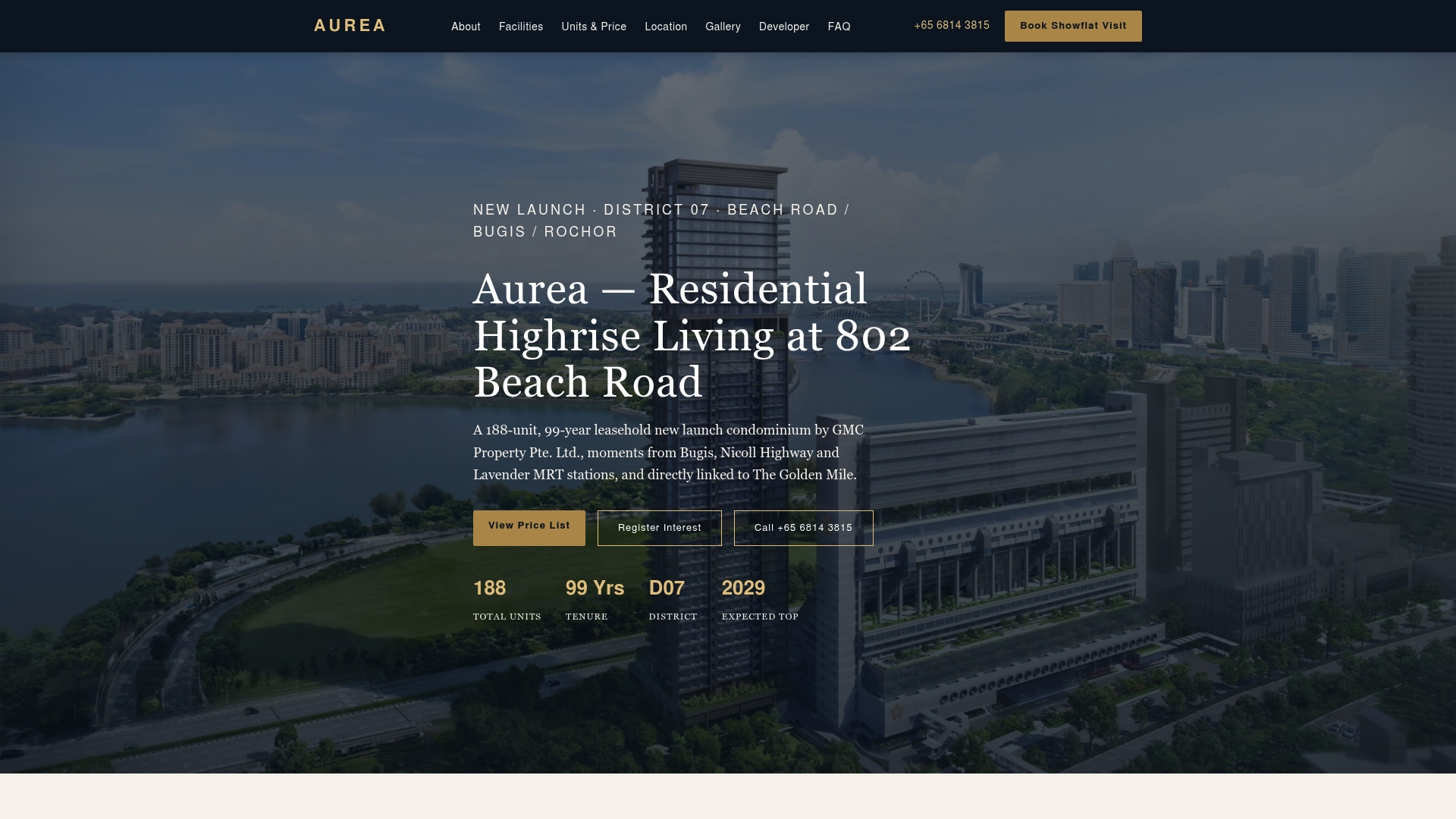
- Browse current unit types and pricing on the Aurea project page.
- Reach out to our sales team or book a viewing once your financing is confirmed.
- Read our cash downpayment guide to plan the gap between your IPA and your actual purchase price.
With resort-style amenities across multiple levels and a covered link bridge to a nearby development. This project gives buyers who already have financing sorted a clear next step toward a unit that fits their household size and budget.
This article is general information, not a substitute for advice from a qualified financial advisor. Consult a qualified financial professional about your own circumstances before acting on anything here.
FAQ
What is IPA in Singapore property?
An IPA, or In-Principle Approval, is a bank's conditional confirmation of the loan amount, tenure, and rate type it is willing to offer you based on your income, credit history, and existing debts. It is not a final loan commitment and remains subject to the bank's formal valuation and legal checks once you sign an Option to Purchase.
How do I apply for an IPA in Singapore?
You apply by choosing a bank or a licensed mortgage broker, then submitting documents such as your NRIC, recent payslips, CPF contribution history, and your latest IRAS Notice of Assessment. Most banks now accept applications through an online portal, while a broker can submit your documents to several banks at once for comparison.
How long does IPA take to approve?
A complete application with no income complications is often approved within a few business days. Delays usually come from follow-up requests for additional documents, particularly for self-employed applicants or buyers with variable income.
How to get IPA from bank for HDB BTO?
For an HDB BTO purchase, affordability is assessed under the Mortgage Servicing Ratio rather than TDSR, since MSR applies specifically to HDB flats and qualifying executive condominiums. You would still submit similar documents, income proof, CPF history, and identification, through the bank you choose for your HDB housing loan or through a mortgage broker.
Sources
For the primary rules behind TDSR, CPF usage, and stamp duty, consult MAS, CPF, and IRAS directly rather than relying on secondhand summaries.
- Macroprudential policies in Singapore
- Retain $20,000 in your OA if you are taking a housing loan
- Stamp duty — IRAS