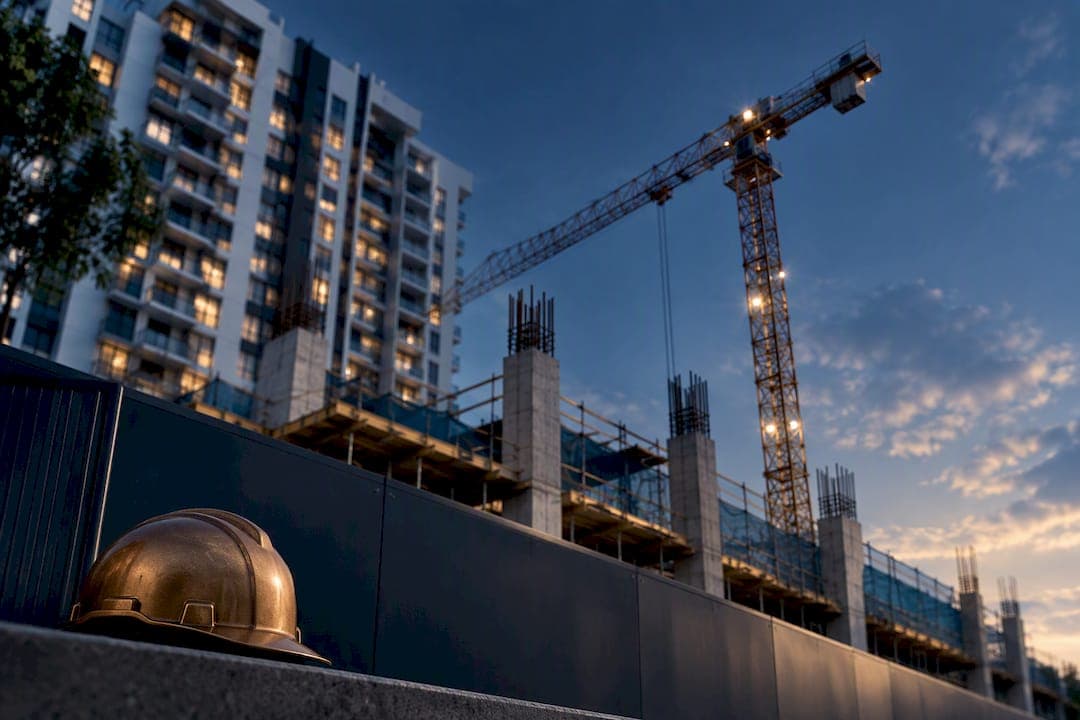
Living near a construction site in Singapore is usually manageable if you know the rules and use them, though noise, dust and disrupted views are real trade-offs during the busiest phases. The first move, before anything else, is to check whether the site falls under NEA's construction noise control rules, whether it has real-time noise meters, and to request its construction schedule and site contact.
TL;DR:
- Buildings facing the construction site directly experience more noise and dust, especially on lower floors and bedrooms close to the street or site activities.
- Noise from demolition, piling, and structural work can reach harmful decibel levels and cause vibrations, mainly during specific busy phases like piling and excavation.
- Sites within 150 meters of residential areas must install real-time noise meters and submit Noise Management Plans, which residents can use to enforce compliance.
- Sleep disruption, stress, and respiratory issues are common health impacts, but annoyance levels tend to decrease over time despite ongoing noise exposure.
- Practical measures for residents include sealing windows, relocating sleep areas, running air purifiers, and engaging early with community channels for timely updates and influence.
Table of Contents
- 1. What to expect: noise, dust and the phases that hit hardest
- 2. Regulations and your rights in Singapore: NEA, BCA and MND explained
- 3. Health and property-value impacts: what studies show
- 4. Practical mitigation: what contractors and residents can do
- 5. Viewing and renting checklist near active or planned works
- 6. Aurea's perspective and practical advice for condo buyers
- 7. Community channels that keep residents informed and heard
- 8. Keeping indoor air clean while work continues outside
- 9. Coping with the mental toll of a long construction project
- Weighing urban convenience against temporary disruption
- Another option: consider Aurea if you would rather skip the uncertainty
- Sources
- FAQ
1. What to expect: noise, dust and the phases that hit hardest
Not all construction phases feel the same from your living room. Demolition, piling and structural frame work are the loudest and most disruptive stages, since they involve heavy machinery, pile drivers and concrete work that generate both high decibel readings and low-frequency vibration you can feel through walls and floors, as explained in this practical guide for Melbourne on tight access excavation. Once the structure tops out, work shifts to finishing trades: plastering, tiling, electrical and plumbing fit-out, which produce shorter bursts of noise rather than continuous rumble.
Construction hours in Singapore follow set time bands, and most sites cannot run heavy machinery around the clock. Weekends bring their own pattern: some sites near homes face a "no-work" restriction on Saturday nights and Sundays, which residents often notice as the first sign the project is regulated.
Beyond noise, staging areas, material deliveries, temporary lane closures and hoarding panels can affect how you get in and out of your block, and they can block views or airflow for months at a time. Two households in the same building can have very different experiences depending on where their bedroom sits.
- Units facing the site directly get more noise and dust than those facing away.
- Bedrooms on lower floors near street level tend to catch more traffic and delivery noise.
- Living or dining rooms are more tolerant of daytime disruption than sleeping areas.
- Units with operable windows on the construction side lose more sound insulation than sealed facades.
Pro Tip: Ask which floor and facade the piling or excavation rig will operate closest to, since that single detail predicts your noise exposure better than the project's overall size.
2. Regulations and your rights in Singapore: NEA, BCA and MND explained
Singapore's construction noise rules are enforced primarily by NEA, which sets permissible noise levels by time band and applies a stricter "no-work" rule for sites within 150 meters of residential or other noise-sensitive premises. Sites that fall within that 150-meter radius are also required to install noise meters, so the readings used for enforcement are not estimates but actual measurements taken at the boundary.
For larger developments near homes, NEA's guidance on noise measurements and Noise Management Plans requires contractors to submit a Noise Management Plan, or NMP, before work begins and to keep monitoring systems running throughout construction. The NMP typically sets out expected noisy activities, mitigation steps and monitoring points, which is exactly the document you should ask to see if you are renting or buying near an active site.
Sites within 150 meters of residential premises are legally required to run real-time noise monitoring, and residents can point to those same meter readings when filing a complaint. If a report and the site's own data disagree, the agency response tends to hinge on that recorded evidence rather than a resident's description alone.
If noise or dust becomes a genuine problem, the practical path is:
- Approach the site office or project manager directly, since many scheduling conflicts get resolved faster this way than through formal channels.
- If that does not work, log a report through OneService or NEA's online channels, noting dates, times and the specific activity.
- Escalate to the Ministry of National Development or your Member of Parliament's office if the issue persists despite repeated reports.
Before filing, gather timestamps, short audio or video clips and, where possible, a note of what the site's own noise meter showed at the time, since specific evidence speeds up any enforcement review.
3. Health and property-value impacts: what studies show

Sleep disruption, stress and respiratory irritation are the health effects most consistently tied to living near active construction, driven by a combination of noise and airborne dust rather than noise alone. Survey-based research on construction noise exposure found that residents living near active sites reported higher stress and disturbance levels, with sleep disruption emerging as a common complaint among those closest to the works, as research on construction noise exposure and stress describes.
A four-year longitudinal study on construction noise found that initial annoyance was often high but tended to decrease over time, and that raw decibel readings explained only part of that annoyance: bedroom location and how safe residents felt near the site mattered just as much, according to the longitudinal study on construction noise annoyance. That is a useful corrective to the assumption that disruption only gets worse the longer a project runs.
Annoyance from construction noise is shaped as much by perceived safety and bedroom placement as by the sound level itself.
On property values, the picture is more mixed than headlines suggest. Academic work on noise externalities from transport infrastructure has found price effects in both directions: some studies recorded value gains of around 13.7% once a rail noise source was removed, while others found smaller negative effects near 3%, according to research on rail noise externalities and housing prices. Those findings come from rail noise studies rather than construction specifically, but they illustrate that noise externalities do register in price, even if the size of the effect varies by context and tends to fade once the source of noise ends.
4. Practical mitigation: what contractors and residents can do
Responsible contractors reduce nuisance with a mix of physical barriers and scheduling discipline. NEA's guidance on noise mitigation measures points out that dBA limits alone are not enough. Barriers, hoarding, padded blankets on machinery, sealed site perimeters, dust suppression and careful timing of the loudest tasks all matter, alongside transparent monitoring that residents can actually see.
On your side of the fence, a few measures make a real difference without requiring major renovation.
- Seal window and door gaps temporarily with acoustic strips to cut down mid-range noise leakage.
- Consider double glazing on the facade facing the site if you own the unit and plan to stay long term.
- Relocate sleeping areas or home workspaces to rooms facing away from the construction, even temporarily.
- Run a HEPA air purifier during the dustiest phases, especially demolition and excavation.
- Ask your landlord or property manager about a quieter work schedule near your unit, or a partial rent adjustment if disruption is prolonged and severe.
Pro Tip: Keep a simple log of dates, times and what you observed before raising a rent adjustment request. Landlords respond faster to a dated record than a general complaint.
When negotiating remediation or compensation with a landlord or developer, start with a specific, documented ask rather than a general one, and only involve NEA or OneService if direct conversation does not resolve it within a reasonable time.
5. Viewing and renting checklist near active or planned works
Before signing a lease or making an offer near a construction site, a short checklist protects you from surprises later.
- Ask for the construction schedule and, if one exists, the Noise Management Plan for the site.
- Confirm whether the site has NEA noise meters installed, since that tells you enforcement is actively monitored.
- Ask whether a pre-construction survey was carried out on the building, and request baseline condition photos if you own the unit.
- Confirm the permitted working hours and whether any after-hours exemptions apply to this specific project.
- Get the name and contact details of the site or community liaison officer.
- Visit at midday and again in the early evening to hear the actual noise level at those times, not just during a scheduled viewing slot.
- Ask specifically when piling or deep excavation is planned, since that phase is usually the loudest and shortest.
6. Aurea's perspective and practical advice for condo buyers
Responsible developers and condo managers typically issue pre-construction notices, run community engagement sessions and disclose Noise Management Plan details for any nearby works, which gives residents a clearer picture before they commit. BCA's "Be Good Neighbours" guidance recommends exactly this kind of engagement, alongside pre-construction surveys and protective measures such as hoarding and netting to limit disputes between adjoining properties.
If you are collecting keys to a new unit while nearby works are still ongoing, our guide to the first 30 days after key collection covers practical steps for settling in smoothly, including what to check during handover inspection.
7. Community channels that keep residents informed and heard
Most construction projects near residential areas maintain some form of resident communication, whether through a dedicated hotline, a site notice board, periodic newsletters or town hall style briefings before major milestones like piling or major road works. Joining these channels early, even before disruption starts, means you hear about schedule changes ahead of time rather than being surprised by a Saturday pile driver.
Residents' committees, Town Council updates and estate management office bulletins are also worth checking, since larger projects near HDB or condo clusters often route updates through these existing structures rather than running a separate one. Where a development has an active liaison contact, using it for specific, dated concerns tends to get a faster and more useful response than a general complaint to a hotline.
Attending consultation sessions when they are offered gives residents a chance to flag concerns about timing, such as exam periods or a household with a shift worker, before the schedule is locked in. It will not eliminate disruption, but it does mean your specific circumstances get considered rather than ignored.
8. Keeping indoor air clean while work continues outside
Dust from demolition and earthworks finds its way indoors even through closed windows, so indoor air quality needs active management during the noisiest construction phases. Keep windows and doors on the construction-facing side closed as much as possible during work hours, and rely on air conditioning or an air purifier for ventilation instead.
A HEPA air purifier sized for your room, run continuously during demolition and excavation phases, is the single most effective step available to most households, since it captures the fine particulate that settles on surfaces and irritates airways. Wipe down surfaces and change or clean air conditioner filters more frequently than usual, since dust accumulates faster near an active site.
If anyone in the household has asthma or another respiratory condition, it is worth checking in with a doctor about whether extra precautions are warranted during the dustiest weeks, particularly around demolition and piling.
9. Coping with the mental toll of a long construction project
Persistent noise and disruption take a psychological toll that is easy to underestimate, especially when a project runs for a year or more. Setting predictable quiet windows, even informal ones based on the site's own published hours, gives your household something to plan around rather than reacting to noise as it comes.
Noise-canceling headphones or a white noise machine during work hours can reduce the sense of being at the mercy of the schedule, and stepping out of the flat during the loudest stretches, even for a short walk, helps reset stress levels. Knowing that annoyance from construction noise often peaks early and eases over time can also help: longitudinal research on residents near construction found that initial annoyance was high but tended to decline as the project progressed, which is worth remembering on a particularly bad week.
If disruption is affecting sleep or mood over a sustained period, treating it as a legitimate stressor rather than something to simply tolerate is reasonable, and speaking with a general practitioner or counselor is a sensible step if it is not improving.
Weighing urban convenience against temporary disruption
Construction is the price of a city that keeps renewing itself, and most of it ends. The households that cope best treat NEA's rules and reporting channels as tools to use, not a last resort, and negotiate specifics with landlords rather than absorbing every inconvenience quietly.
— Velisa
Another option: consider Aurea if you would rather skip the uncertainty
If the idea of monitoring noise meters and chasing schedules does not appeal to you, buying into a development that has already worked through its own construction phase is a straightforward alternative. Aurea is a condominium development located near multiple MRT lines and offers resort-style amenities across several levels, including pools and fitness facilities.

For buyers comparing a unit near an active site against a finished, amenity-rich alternative, Aurea's 2 Bedroom, 3 Bedroom, 4 Bedroom and larger layouts are worth a look on the Aurea landing page, where current unit availability and layouts are listed.
Sources
This guide draws on NEA's construction noise control guidance, BCA's Be Good Neighbours resource, and peer-reviewed research on construction noise annoyance and property-value effects.
- Construction noise control (NEA)
- Longitudinal study on construction noise annoyance (PubMed, 2025)
- Be good neighbours (BCA)
FAQ
What are your rights when it comes to nearby construction?
You have the right to expect construction to follow NEA's permitted noise time bands and, for sites within 150 meters of your home, to have real-time noise meters installed for enforcement, as set out in NEA's construction noise control rules. You can also request a site's Noise Management Plan and report breaches through NEA or OneService if the site is not complying.
What are the noise regulations for construction sites in Singapore?
Construction noise limits are set by time band, with tighter limits in the evening and at night than during the day, and sites within 150 meters of homes face a stricter "no-work" rule on certain days, according to NEA's noise control guidance. Larger projects near residential premises must also submit a Noise Management Plan before starting work, which outlines noisy activities and mitigation steps.
What time must construction noise stop in HDB?
Sites within 150 meters of residential premises, including HDB blocks, are subject to a "no-work" rule that restricts work during certain weekend and overnight periods, as described in NEA's construction noise rules. Exact permitted hours depend on the site's classification, so checking the specific project's schedule with NEA or the site office gives the most accurate answer for that location.
Can I complain about renovation noise?
Yes, you can report excessive renovation or construction noise through NEA or the OneService app, and gathering timestamps and, where possible, audio or video helps the report move faster. If the noise is coming from a site within 150 meters of your home, you can also ask whether its noise meter readings support your complaint before escalating further.