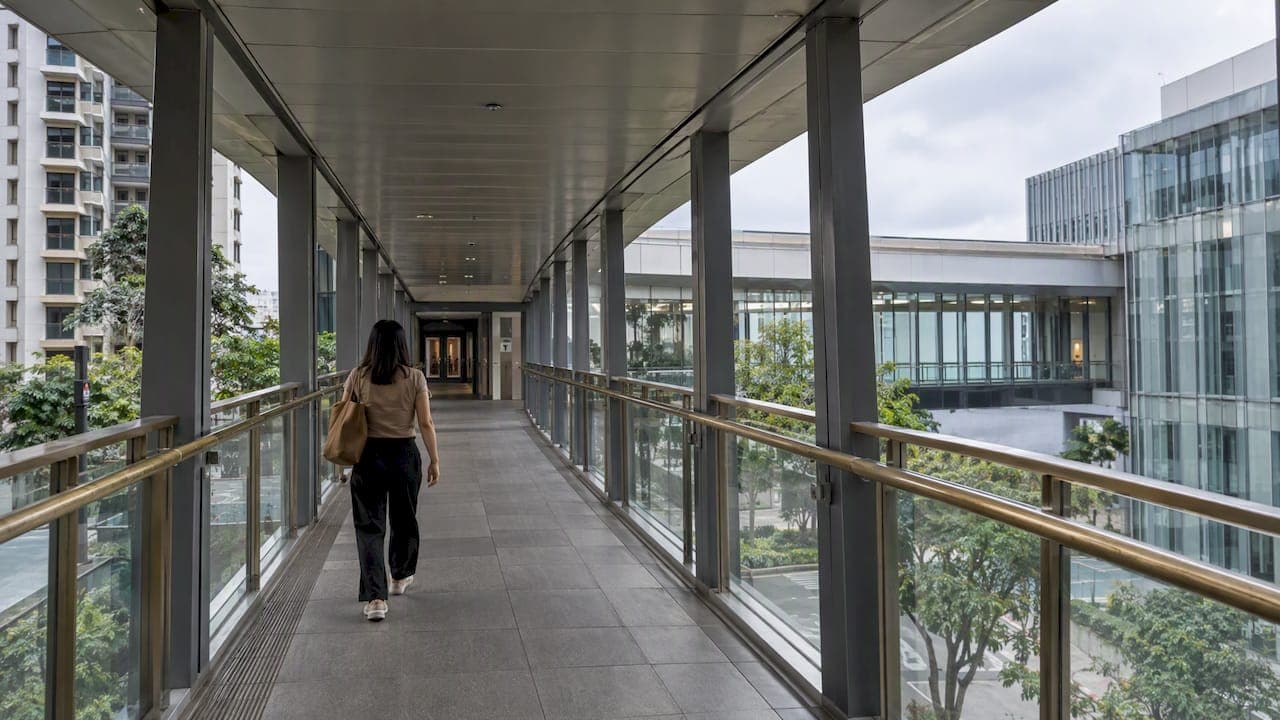
A fully sheltered, continuous covered link bridge to an MRT station genuinely improves daily comfort and how walkable a condo feels. Under the LTA Walk2Ride programme, sheltered connections to MRT stations are prioritized within 400 meters, provided the condominium offers a sheltered route inside its own compound. A bridge with exposed gaps delivers far less than the brochure promises.
TL;DR:
- Walk2Ride prioritizes MRT links within 400 meters and LRT or bus interchange links within 200 meters, conditional on a sheltered condo route to the gate.
- Walk from the block lobby to the station entrance, then compare the route with site plans and written confirmation rather than relying on sales renderings.
- Singapore pedestrian research finds sheltered routes improve comfort and make walks feel shorter, but no reliable resale premium is established for buyers to price in.
- Elevated links can shelter pedestrians from traffic yet may weaken ground floor shops and activity; buyers should check units for sightlines, screening, and upkeep costs.
Table of Contents
- What is a covered link bridge condo, and how does Singapore define it?
- Why does sheltered connectivity matter when you buy a condo?
- What should you inspect and ask before trusting a link bridge claim?
- What are the trade-offs of covered and elevated linkways?
- How do you read a developer's covered bridge claim, using Aurea at Beach Road?
- How I weigh covered linkways when advising buyers
- Why Aurea suits buyers who put sheltered connectivity first
- FAQ
- Sources
What is a covered link bridge condo, and how does Singapore define it?
A covered link bridge condo is a residential development with a roofed pedestrian connection to a nearby transit station, mall or neighboring building. Buyers will also hear it called a covered linkway or sheltered link. The word "bridge" usually means the link is elevated, crossing a road or a drain, rather than running along the ground.
Singapore's Land Transport Authority separates covered linkways into low and high types. Its covered linkway design quick guide sets a minimum headroom of 2.4 meters for low linkways and 5.7 meters for high ones. It also covers minimum width, roof gradient, drainage and a checklist for mechanical and electrical items, all aimed at weatherproofing and user comfort.
The policy side matters just as much. Walk2Ride prioritizes sheltered links to MRT stations within 400 meters and to LRT or bus interchanges within 200 meters. A written reply from the Minister for Transport in July 2017 confirmed that LTA will build a linkway to an MRT station within 400 meters only if the condominium provides a sheltered route within its compound, from the residential blocks to the gate. The same reply states that the Government does not fund linkways from private condos to bus stops.
The URA adds a planning layer. It encourages developers of large condominiums to submit a Walking and Cycling Plan so that access to MRT stations and amenities is direct, convenient and safe.
Here is what to hold in your head when a sales gallery says "covered link":
- Continuity: the shelter must run from your block to the station, not just across one road.
- Headroom: a low linkway starts at 2.4 meters, a high one at 5.7 meters.
- Width and gradient: the guide sets minimums and expects a roof slope and drainage that keep the path dry.
- Compound shelter: your condo's own internal route is part of the equation, not an optional extra.
- Distance rules: 400 meters for MRT, 200 meters for LRT and bus interchanges.
Why does sheltered connectivity matter when you buy a condo?
Singapore's rain and heat can make an unsheltered walk feel much longer than a sheltered one. Researchers have measured this. A pedestrian study in Singapore found that sheltered link-ways score better on comfort, weather protection and Level of Service, and that people on unsheltered routes over-perceive how long and how far they are walking.
Sheltered link-ways rate better on comfort and weather protection, while unsheltered routes make walks feel longer than they are. For a buyer, that means a condo a short distance from an MRT station with a continuous roof can feel closer than one farther away across open pavement.
The daily benefits are easy to picture:
- Weather protection: you keep dry during afternoon downpours and out of direct sun.
- Safer routes for families: a dedicated path keeps children and older relatives away from road edges.
- Shorter perceived commutes: an easier walk makes the MRT a default choice instead of a ride-hail booking.
- Predictability: you can plan door-to-platform time without padding for weather.
On resale, be careful. Developers often market sheltered connectivity as a premium convenience, and many buyers do value it. We would not put a number on that premium, because published figures vary by location and market cycle. Treat the link as a feature that may support demand, and judge it by how well it works rather than by how loudly it is advertised.
If you want a sense of what counts as a short walk in the first place, our post on what counts as walking distance to MRT walks through the reasoning.
What should you inspect and ask before trusting a link bridge claim?
Marketing renders show a clean, continuous canopy. The real route can differ. Use this order when you visit a site, a show flat or a completed development nearby.
- Walk the full route on foot. Start at the residential block lobby and end at the station entrance. Time it and note every spot where the roof stops.
- Look for exposed sections inside the development. The condo's internal path from block to gate is where gaps most often hide, and it is also the part LTA expects the developer to provide.
- Check headroom and width by eye. Does the structure feel cramped or generous? Compare against the 2.4 meter and 5.7 meter figures in the LTA design guide.
- Test slopes, ramps and drainage. Visit after rain if you can. Standing water, slippery surfaces and steep ramps show up fast.
- Check how levels meet. URA's pedestrian and cyclist friendly features guidance says covered walkway levels should match adjacent open walkway levels, with ramps starting after the covered section.
- Ask for the site plan. It should show the sheltered path from each block to the gate and onward to the link.
- Ask who maintains the linkway. Find out whether the developer, the management corporation or a public agency is responsible, and whether any LTA extension is expected or has been applied for.
Pro Tip: Ask for a written statement or plan that shows the continuous sheltered route and sets out management corporation responsibilities. A verbal "it's all covered" is not a document you can rely on later.
For a broader verification routine, our guide on three checks for MRT premium condos pairs well with this list.
What are the trade-offs of covered and elevated linkways?
Convenience is not free. Planning commentary from the Centre for Liveable Cities notes that elevated pedestrian networks can raise comfort and shelter people from traffic, yet they can also reduce street-level vibrancy and affect shopfront value and building facades when ground-level activity is not preserved.

Think of it this way: every person walking above the road is one fewer person passing the cafe, the clinic or the minimart at street level. Over time, that can thin out the retail and the life that make a neighborhood pleasant to live in.
Elevated links make the most sense where roads are wide and fast, or where crossings are safety-critical. In calmer, finer-grained streets, an at-grade sheltered path often serves people better and keeps the ground floor alive.
Before you commit to a unit, weigh these points:
- Proximity to the bridge: units facing or sitting close to an elevated walkway may face passing foot traffic and sight lines into living spaces.
- Privacy mitigation: ask whether screening, planting or frosted panels are planned along the link.
- Visual impact: a long roofed structure can dominate a view or a facade. Check renders against the real approach.
- Maintenance burden: roofs, gutters and lighting need upkeep, and the cost lands somewhere. Clarify where.
- Street activation: ask how the surrounding streets and ground-floor shops will stay active once many residents use the link.
None of this cancels the benefit of a good link. It simply means the best choice balances weather protection with a neighborhood you still want to walk through at ground level.
How do you read a developer's covered bridge claim, using Aurea at Beach Road?
Take our own project as a worked example. We describe Aurea at 802 Beach Road as having a link bridge to The Golden Mile, alongside proximity to multiple MRT stations and resort-style amenities. Those are exactly the kind of claims you should verify rather than accept.
A "direct link bridge to The Golden Mile" typically implies a roofed, elevated connection from the development into the neighboring complex. To confirm it, ask for the site plan showing where the bridge starts inside the compound, where it lands, and whether the route from each residential block to the bridge is sheltered. Then walk it once it is physically available, or review the approved drawings until then.
The continuity rule shapes what to expect next. Because LTA looks for a sheltered internal route before considering a government-built MRT extension, a link that is complete inside the compound is better placed to connect onward. Beach Road's station options are mapped in our Beach Road MRT connectivity guide, which helps you test claims against actual exits.
How I weigh covered linkways when advising buyers
My advice is simple: pay for continuity and design quality, not for the phrase "covered link" in a brochure. A short, fully sheltered, well-drained route beats a longer, patchy one every time, and the difference only shows up when you check the documents and walk the path.
I rank the checks in this order. First, continuity from the block door to the station. Second, maintenance and legal responsibility, because a link nobody is accountable for decays. Third, what the link does to street-level activity around your home. Ask for the site plans and get written confirmation of the sheltered route before you sign anything.
— Velisa
Why Aurea suits buyers who put sheltered connectivity first
If sheltered access is high on your list, Aurea is worth a close look. Our development offers direct covered link bridge access to The Golden Mile, short walking distance to multiple MRT lines, and a choice of layouts for different household sizes.
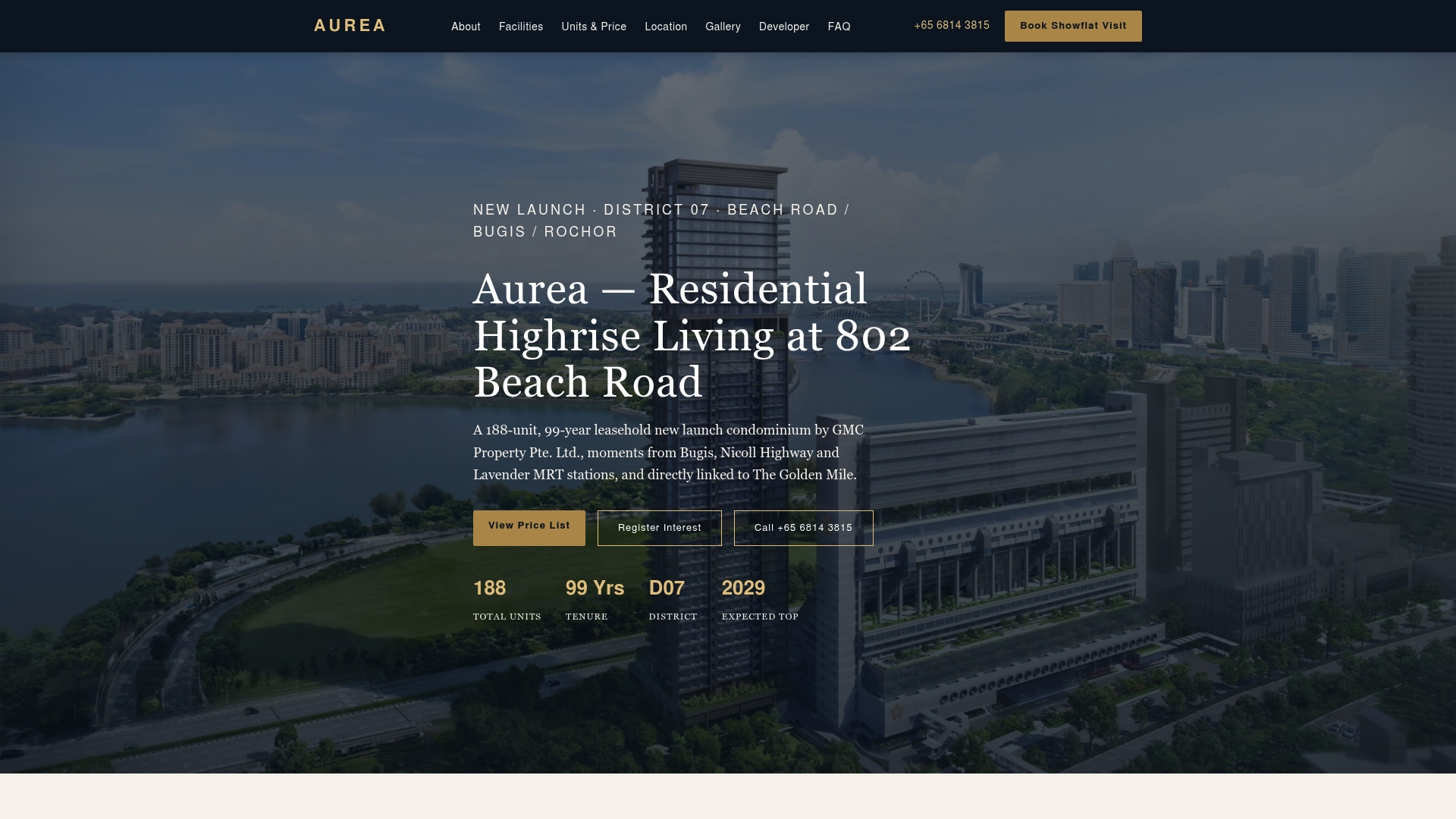
Here is what is relevant to the checks in this article:
- Link bridge to The Golden Mile: the connection we describe for residents heading toward the surrounding area.
- Multiple MRT stations nearby: useful if you want options across lines.
- Unit types: 2 to 5 bedroom homes plus two penthouses. Our 2 Bedroom and 3 Bedroom units are listed on our project page; current prices are on our project page.
When you reach out, ask for the site plan showing the sheltered route, request documentation of the link and book a viewing so you can compare what you see with what you read. You can start on our project page to see layouts and arrange a visit.
This article is general information, not a substitute for advice from a qualified financial advisor. Consult a qualified financial professional about your own circumstances before acting on anything here.
FAQ
Is a covered link bridge condo worth paying more for?
It can be, if the shelter is continuous from your block to the station. Research on Singapore pedestrians suggests sheltered routes feel more comfortable and shorter, but we do not claim a fixed price premium, so judge it case by case.
What is the LTA Walk2Ride distance for MRT stations?
Walk2Ride prioritizes sheltered links to MRT stations within 400 meters and to LRT or bus interchanges within 200 meters. The condominium is expected to provide a sheltered internal route for an externally funded linkway to be considered.
How do I check that a covered link bridge is really continuous?
Walk the whole path from your block to the station, look for open stretches inside the compound, and ask for a site plan that shows the sheltered route. A written statement from the developer is the strongest proof.
Who maintains a covered link bridge?
It depends on who built and owns the structure. Ask the developer and, after handover, the management corporation, and get the answer in writing, because maintenance responsibility affects long-term upkeep.
Sources
- Lta
- Walking and Cycling Plan (WCP) | Urban Redevelopment Authority (URA)
- 1.0 Objectives of Covered Linkways
- Written Reply by Minister for Transport Khaw Boon Wan to Parliamentary Question on Qualifying Criteria to Build Covered Linkway from Private Housing to Nearest Bus Stop | Ministry of Transport
- Full article: Quantifying performance of sheltered link-way facility in Singapore using human-centric indicators