
You can buy residential property under a trust in Singapore, but three constraints will determine whether the structure actually works for you: ABSD (Trust) exposure, CPF ineligibility, and lender appetite. Get those wrong and the structure costs far more than it saves.
What to check immediately:
- Trustee authority: Confirm the trust deed explicitly grants the trustee power to acquire, hold, and mortgage real property. Without that clause, your conveyancer cannot proceed and your lender will not advance funds.
- ABSD (Trust) exposure: Under the Stamp Duties (Trusts for Identifiable Individual Beneficiary) (Remission of ABSD) Rules 2022, ABSD is assessed based on the profile of the beneficial owners. Check whether your beneficiaries trigger ABSD and whether you qualify for remission via IRAS).
- CPF and financing: CPF funds ordinarily cannot be used for a trust purchase. Budget for cash settlement or prepare for stricter lending terms from banks.
- Primary sources: The IRAS Remission of ABSD (Trust) page and the Attorney-General's Chambers Statutes Online (SSO) are your two authoritative references. Aurea-sgcondo's sales team at 802 Beach Road is one example of a new-launch developer whose process intersects directly with trust purchases.
Key Takeaways
Buying residential property under a trust in Singapore is legally possible, but ABSD exposure, CPF ineligibility, and lender constraints are the three factors that determine whether the structure is financially viable.
| Point | Details |
|---|---|
| ABSD assessed on beneficiary profile | IRAS applies the highest ABSD rate among all identifiable beneficiaries; remission may be available under the 2022 Rules. |
| CPF cannot be used | CPF funds are tied to the individual title holder; trust purchases require cash or bank financing without CPF support. |
| Name the trustee correctly from day one | Signing as an individual and nominating the trust later can trigger double stamp duty under Singapore duties law. |
| Trust deed must grant acquisition powers | Without an explicit power to acquire and mortgage real property, the trustee cannot legally proceed and lenders will not advance funds. |
| Aurea-sgcondo for new-launch trust purchases | The Aurea-sgcondo sales team at 802 Beach Road can guide trust-structured buyers through the developer's process and connect them with specialist solicitors. |
Table of Contents
- What "buying property under a trust" means in Singapore
- Why people buy residential property in a trust
- ABSD (Trust) and stamp duty: what IRAS requires and how to apply for remission
- Financing a trust purchase: CPF, bank lending, and what to prepare
- Tax consequences and recurring costs for trust-held property
- How to set up the trust and complete conveyancing for a trust purchase
- Can property held in a trust be sold or transferred?
- Pros, cons, and the key risks of buying property under a trust
- Step-by-step checklist and timeline for a trust property purchase
- Applied example: how the checklist plays out for an Aurea new-launch purchase held by a trust
- When buying under a trust makes sense, and when it doesn't
- Considering a new-launch unit at Aurea under a trust structure?
- Authoritative primary sources and further reading
- Sources
What "buying property under a trust" means in Singapore
The phrase "buying property under a trust" refers to a structure where the trustee holds legal title to the property while the beneficiary holds the equitable (beneficial) interest. The settlor is the person who creates the trust and transfers assets into it, though in many Singapore residential purchases the settlor and the beneficiary are different people.
In practice, the trustee signs the sale and purchase agreement, appears on the title, and is the party the Singapore Land Authority registers as owner. The beneficiary never appears on the title but is entitled to the economic benefit: rental income, sale proceeds, and eventual distribution of the asset. That split between legal and beneficial ownership is the defining feature of how family trusts work for property.
Common trust types used for Singapore residential property:
- Discretionary family trusts: The trustee has discretion over how income and capital are distributed among a class of beneficiaries. Used widely for estate planning and holding investment condos.
- Bare trusts (nominee trusts): The trustee holds the property purely as nominee for a named beneficiary who has absolute entitlement. Simpler to administer but offers less flexibility.
- Revocable living trusts: The settlor retains the right to revoke or amend the trust during their lifetime. Less common in Singapore for residential property but used in cross-border estate planning.
A practical example: parents buy a condominium unit as trustees for their minor child. The child is the beneficiary and will receive the property (or its proceeds) at a specified age. The parents sign the option to purchase in their capacity as trustees, not as individuals. That distinction matters to the conveyancer, the lender, and IRAS.
The trust deed must be reviewed before any contract is signed. Conveyancers and lenders will ask to see the deed to confirm the trustee's acquisition powers. If the deed is silent on property purchases, the trustee may lack authority, which can stall or void the transaction.
Why people buy residential property in a trust
The motivations are real but narrower in Singapore than in some other jurisdictions. Tax advantages that drive trust structures in Australia or the UK are largely absent here, so buyers tend to rely on non-tax drivers.
Succession planning is the most common reason. A trust lets you specify exactly how and when a property passes to the next generation, bypassing probate entirely. For families with assets in multiple jurisdictions, that can save months of legal work and significant cost.
Protection for minors and incapacitated beneficiaries is the second major driver. A minor cannot hold legal title to property in Singapore. A trust solves that cleanly: the trustee holds and manages the property until the beneficiary reaches the specified age or condition. The same logic applies when a beneficiary has a disability that limits their legal capacity.
Asset protection is often cited but needs qualification. Trusts can shield assets from future creditor claims, but that protection is not absolute. Family-law claims and certain creditor actions can still reach trust assets, particularly where the trust is seen as a sham or where the settlor retains excessive control. Singapore courts look at substance over form.
Privacy and centralized family ownership matter to some buyers, particularly high-net-worth families who prefer that a property not appear in an individual's name in public records.
What trusts do not offer in Singapore: generous income-splitting tax advantages, negative gearing benefits, or capital-gains-tax sheltering. Singapore has no capital gains tax on property for individuals either, so the tax differential between personal and trust ownership is narrower than buyers sometimes assume. The structure must be tested against Singapore's actual rules before committing to it.
ABSD (Trust) and stamp duty: what IRAS requires and how to apply for remission
This is the section most buyers get wrong, and the cost of getting it wrong is substantial.
When a trust acquires residential property in Singapore, ABSD is assessed based on the profile of the beneficial owners, not the trustee. IRAS applies what practitioners call the "beneficiary profile doctrine": the ABSD rate is determined by looking at who the beneficiaries are, their residency status, and how many residential properties they are treated as owning. The Stamp Duties (Trusts for Identifiable Individual Beneficiary) (Remission of ABSD) Rules 2022 set out the statutory framework for when remission is available.
How the ABSD assessment works: IRAS applies the highest applicable ABSD rate among all identifiable beneficiaries. If one beneficiary is a Singapore Permanent Resident purchasing a second property and another is a foreign national, the foreign national's rate applies to the whole transaction. Practitioners therefore structure beneficiary classes carefully and avoid mixing profiles that would trigger the highest rate unnecessarily.
When remission is available: Remission or refund of ABSD is available where the trust has identifiable individual beneficiaries who are Singapore Citizens and the conditions under the 2022 Rules are met. The IRAS Remission of ABSD (Trust) guidance sets out the eligibility criteria, required documents, and application procedure in full.
Step-by-step remission application process:
- Confirm eligibility: Verify that all beneficiaries are identifiable individuals (not companies or discretionary classes) and that the eligibility conditions under the 2022 Rules are satisfied.
- Prepare the trust deed: The deed must clearly identify the beneficiaries and their entitlements. Ambiguous or discretionary beneficiary clauses will likely disqualify the application.
- Gather required documents: Trust deed (certified copy), trustee identity documents (NRIC/passport), beneficiary declarations, statutory declaration confirming beneficiary profile, and any IRAS-prescribed forms.
- Submit to IRAS: File the remission application with IRAS within the prescribed timeframe after the dutiable instrument is executed. Late applications risk losing the remission entirely.
- Respond to IRAS queries: IRAS may request additional information on beneficiary identity or trust structure. Respond promptly; delays extend the processing timeline.
- Receive determination: IRAS issues a written determination. If remission is granted, the ABSD is either not collected or refunded depending on when in the process the application was made.
Documentation and outcome matrix:
| Transaction type | Common ABSD outcome | Primary documents required |
|---|---|---|
| Trust with identified Singapore Citizen beneficiary/ies meeting 2022 Rules conditions | Remission potentially available | Trust deed, beneficiary declarations, trustee ID, IRAS prescribed forms |
| Trust with foreign national beneficiary | Higher ABSD rate applies; remission unlikely | Trust deed, beneficiary nationality confirmation |
| Discretionary trust (no identified individual beneficiary) | ABSD assessed at highest applicable rate; remission not available | Trust deed confirming discretionary class |
| Trust with mixed beneficiary profiles | ABSD assessed at highest-profile beneficiary's rate | Full beneficiary schedule, residency/ownership declarations |
Pro Tip: Never assume the trust structure reduces your ABSD exposure without a written opinion from a tax adviser. IRAS assesses substance, and a structure that looks like it lowers ABSD but lacks genuine beneficiary identification will be assessed at the highest rate.
Financing a trust purchase: CPF, bank lending, and what to prepare
The financing picture for trust purchases is significantly more constrained than for individual purchases, and buyers who discover this after signing the option to purchase face serious problems.
CPF is ordinarily unavailable. CPF Board rules tie CPF usage to the individual member's name on the property title. Since the trustee (not the beneficiary) holds legal title, the beneficiary's CPF account cannot be drawn on to fund the purchase. This is one of the most commonly overlooked constraints, and consumer-facing guidance consistently flags it as a reason many buyers ultimately choose direct ownership instead.
Bank lending is possible but harder. Most Singapore banks will lend to a trustee, but they apply stricter underwriting. Expect:
- Lower loan-to-value ratios than for individual purchases
- Requests for personal guarantees from the settlor or beneficiaries
- Full review of the trust deed to confirm the trustee's power to mortgage
- Requests for a solicitor's confirmation or Certification of Trust
- Longer approval timelines due to additional legal due diligence
Practical steps before approaching a lender:
- Have a certified copy of the trust deed ready, with the acquisition and mortgage powers clearly marked
- Prepare trustee identity documents (NRIC or passport, proof of appointment)
- Be ready to provide a trustee resolution authorizing the specific purchase and mortgage
- Ask your conveyancer to prepare a short-form Certification of Trust for the lender's legal team
- Confirm with the lender in writing whether they will lend to a trust before signing the option to purchase
Developer financing for new launches is generally not available for trust purchases. New-launch developers in Singapore typically require the purchaser to arrange their own financing and do not offer in-house trust-purchase facilities.
The practical reality: most trust purchases of Singapore residential property are settled in cash. If cash settlement is not feasible, confirm lender appetite before committing to the structure.
Pre-OTP checklist for financing:
- Confirmed lender willingness to lend to a trustee in writing
- Trust deed reviewed for mortgage powers
- CPF ineligibility acknowledged and cash reserves confirmed
- Trustee resolution drafted and ready for lender review
- Conveyancer engaged and briefed on trust structure
Tax consequences and recurring costs for trust-held property
Rental income earned by a trust on Singapore residential property is taxable. The trustee must report rental income to IRAS, and the tax treatment depends on how the trust distributes income to beneficiaries. Where income is distributed, beneficiaries may be taxable on their share at their personal income tax rates. Where income is retained in the trust, the trustee is assessed. Trustees should maintain clear accounts separating trust income from personal income.
Property tax applies to trust-held property in the same way as individually owned property. The rate depends on the property's annual value and whether it is owner-occupied or non-owner-occupied. Since a trust beneficiary typically does not "occupy" the property in the owner-occupier sense recognized by IRAS, the non-owner-occupier property tax rate usually applies, which is higher.
Stamp duty on future transactions is a significant ongoing consideration. When trust property is eventually sold, Seller's Stamp Duty (SSD) may apply if the property is sold within the holding period. When property is transferred from the trust to a beneficiary, that transfer is a dutiable transaction and may trigger ABSD again depending on the beneficiary's profile at the time of transfer. Timing those transfers carefully, with tax advice, can materially affect the total cost.
Trustee fees and administrative costs add up over time. Professional trustees charge annual fees. Even where a family member acts as trustee without a fee, the administrative burden includes annual accounts, tax filings, and compliance with the trust deed's reporting requirements. Investopedia's primer on buying a home in trust recommends budgeting for both setup costs and ongoing trustee fees as part of transaction planning.
One point worth stating plainly: Singapore does not offer the income-splitting or negative-gearing tax advantages that make trusts attractive for property investors in Australia. Buyers who structure a trust primarily for tax reasons in Singapore often find the tax savings do not justify the additional cost and complexity.
How to set up the trust and complete conveyancing for a trust purchase
Start here: before signing any contract, verify that the trust deed grants the trustee explicit power to acquire, hold, mortgage, and sell real property. A deed that is silent on this point, or that limits the trustee to holding financial assets, will create problems at every subsequent stage.
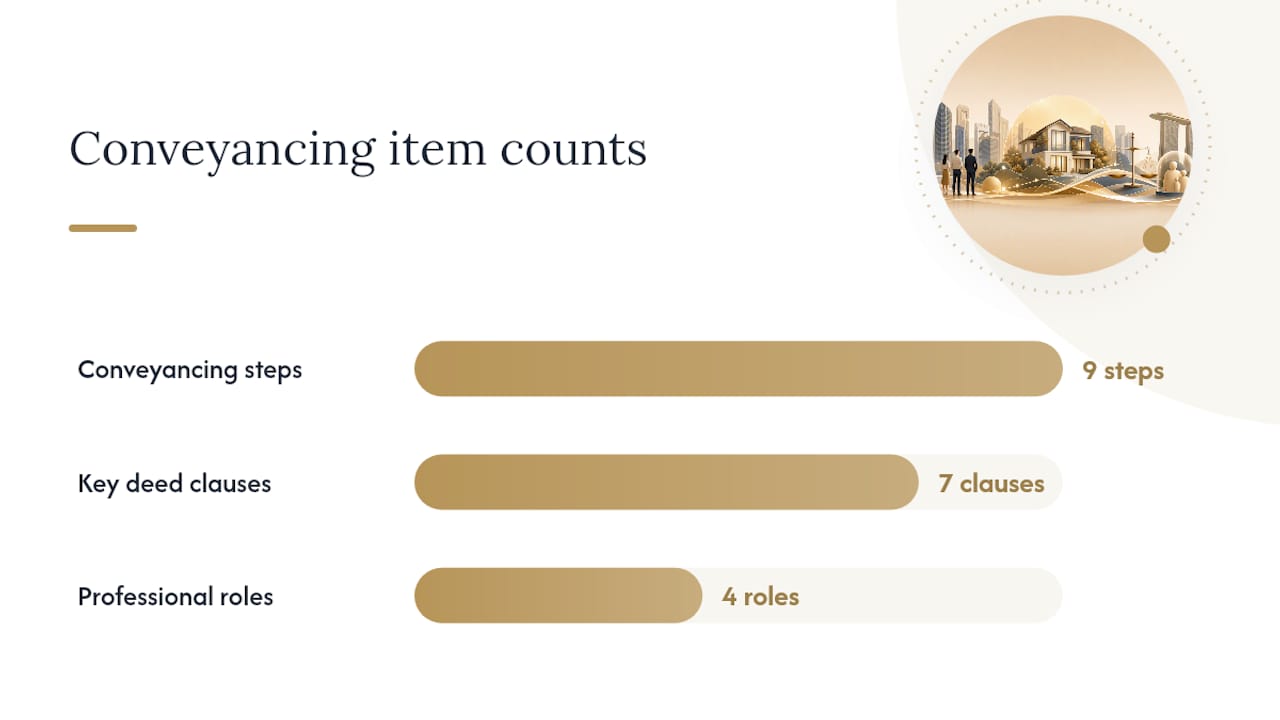
Step-by-step conveyancing flow:
- Engage a trust lawyer to draft or review the trust deed. Confirm acquisition powers, mortgage powers, distribution powers, and any restrictions on foreign beneficiaries.
- Appoint the trustee formally and document the appointment. The trustee's name, as it will appear on the sale contract and title, must be confirmed at this stage.
- Engage a conveyancing solicitor and brief them on the trust structure before the option to purchase is issued.
- Sign the option to purchase in the trustee's name. The trustee signs as "ABC, as trustee of the XYZ Trust" or equivalent. Naming the trustee correctly from the outset is non-negotiable: signing as an individual and nominating the trust later can be treated as two separate dutiable transactions, triggering double stamp duty.
- Submit ABSD remission application to IRAS if applicable, with all required documents.
- Lender due diligence (if financing): provide the trust deed, trustee resolution, and Certification of Trust to the lender's legal team.
- Complete and register title in the trustee's name at the Singapore Land Authority.
- Post-completion: file stamp duty returns, update IRAS records for rental income reporting, and notify the management corporation (MCST) of the trustee's identity and contact details.
Key trust deed clauses to verify before signing:
- Power to acquire real property
- Power to mortgage or charge real property
- Power to sell and reinvest proceeds
- Distribution powers (income and capital)
- Irrevocability clause (if applicable)
- Exclusion of foreign beneficiaries (relevant where ABSD exposure is a concern)
- Trustee succession provisions
Professional roles: the trust lawyer drafts and reviews the deed; the conveyancing solicitor handles the property transaction; the tax adviser handles ABSD analysis and IRAS filings; the lender's solicitor reviews the trust deed for mortgage purposes. All four roles may be needed for a complex trust purchase. For straightforward bare trusts, the conveyancing solicitor and tax adviser may be sufficient.
On court examples: Singapore practitioners cite High Court cases where trustees lacked clear authority to sell or mortgage trust property, resulting in transactions being voided or disputed. The consistent lesson from those cases is that ambiguous or silent trustee powers in the deed are the single most common source of litigation. A deed review before signing costs a fraction of what a court dispute costs.
Can property held in a trust be sold or transferred?
Yes, trust property can be sold, but the process requires more steps than an individual sale.
The trustee, as legal owner, executes the sale. Before doing so, the trustee must confirm that the trust deed grants a power of sale, obtain any required co-trustee consents (where there are multiple trustees), and consider whether the sale is in the best interests of the beneficiaries. Where the trust deed is silent on the power of sale, the trustee may need to apply to the High Court for authorization.
Typical constraints on sale or transfer:
- Co-trustee consent rules: where the deed requires unanimous trustee consent, one dissenting trustee can block a sale
- Beneficiary protections: some deeds require beneficiary consent before sale, particularly for irrevocable trusts
- Directed-trust complications: where a protector or investment adviser has direction rights over the trustee, their consent may also be required
- Lender consent: if the property is mortgaged, the lender must consent to the sale and will require discharge of the mortgage at completion
Confirming trustee authority with third parties is a recurring practical issue. Management corporations (MCSTs) and community associations dealing with a trust-owned unit need to confirm who has authority to act on behalf of the trust. LP Legal's guidance on units owned by trusts recommends requesting a Certification of Trust or equivalent document that confirms the trustee's identity and authority before accepting instructions or correspondence from anyone claiming to act for the trust.
Practical red flags:
- Trustee powers that are ambiguous or limited to "holding" rather than "dealing with" property
- Missing trustee resolutions authorizing the specific transaction
- Competing beneficiary claims where beneficiaries dispute the trustee's decision to sell
- Failure to notify the lender or MCST of the trustee's identity before the transaction proceeds
- A trustee who has died or resigned without a successor being formally appointed
Pros, cons, and the key risks of buying property under a trust
Advantages:
- Succession planning without probate: property passes to beneficiaries according to the trust deed, bypassing the estate administration process
- Protection for minor or incapacitated beneficiaries who cannot hold legal title
- Asset protection from future creditor claims (subject to limits)
- Privacy: the beneficiary's name does not appear on the public title register
- Centralized family ownership for multi-generational property holding
Disadvantages:
- ABSD exposure: the trust structure does not reduce ABSD and may increase it if beneficiary profiles are not managed carefully
- CPF ineligibility: beneficiaries cannot use CPF to fund the purchase or service a mortgage
- Lender restrictions: stricter LTV ratios, personal guarantee requirements, and longer approval timelines
- Administrative burden: ongoing trustee accounts, tax filings, and compliance costs
- Setup and ongoing trustee fees add to total transaction cost
- Impact on beneficiary's future property purchases: the trust property may be counted when assessing the beneficiary's ABSD profile for a future personal purchase
- HDB eligibility: a beneficiary who holds an interest in a trust-owned private property may be affected in their eligibility for public housing
Top risks and how to mitigate them:
- ABSD exposure: Get a written tax opinion before structuring the trust. Do not assume remission is automatic.
- Double stamp duty: Name the trustee correctly on the option to purchase from day one. Never sign as an individual with the intention to nominate the trust later.
- Lender refusal: Confirm lender appetite in writing before signing the OTP. Do not assume your bank will lend to a trustee.
- Trustee mismanagement: Choose a trustee with clear fiduciary duties documented in the deed. Consider a professional trustee for high-value holdings.
- Court disputes over trustee powers: Have the deed reviewed by a trust lawyer before signing any contract. Ambiguous powers are the most common source of litigation.
Step-by-step checklist and timeline for a trust property purchase
Pre-signing stage (allow 4–8 weeks):
- Engage a trust lawyer to draft or review the trust deed
- Confirm trustee appointment and document it formally
- Identify all beneficiaries and confirm their ABSD profiles with a tax adviser
- Obtain a written ABSD opinion and confirm remission eligibility with IRAS
- Confirm CPF ineligibility and verify cash reserves or lender appetite
- Engage a conveyancing solicitor and brief them on the trust structure
Contract stage (OTP and S&P, typically 2–3 weeks after OTP):
- Sign the option to purchase in the trustee's name (not as an individual)
- Submit ABSD remission application to IRAS within the prescribed period
- Provide trust deed and trustee documents to the lender for due diligence
Financing and settlement (allow 8–12 weeks for new launches; shorter for resale):
- Obtain lender approval (if financing); expect additional time for trust-related due diligence
- Complete and register title at the Singapore Land Authority in the trustee's name
- Pay all stamp duties and confirm ABSD remission outcome with IRAS
Post-completion:
- Notify the MCST of the trustee's identity and provide a Certification of Trust
- Set up trustee accounts for rental income reporting to IRAS
- File annual tax returns for trust income
Typical cost ranges (indicative, not guaranteed):
| Cost item | Indicative range | Notes |
|---|---|---|
| Trust deed drafting (legal fees) | varies depending on complexity | Varies by complexity; Investopedia notes legal fees as the primary setup cost |
| Conveyancing fees | varies depending on scope and location | Standard conveyancing plus trust-related additional work |
| ABSD (if applicable) | Varies by beneficiary profile | Confirm with IRAS; remission may apply under 2022 Rules |
| Annual trustee fees (professional trustee) | typically involve annual fees subject to arrangement | Waived if family member acts as trustee without fee |
| Stamp duty (BSD) | Based on purchase price | Standard rates apply regardless of trust structure |
Key contacts: IRAS stamp duty enquiries (iras.gov.sg), Attorney-General's Chambers SSO for legislation (sso.agc.gov.sg), your appointed conveyancing solicitor, and a trust-specialist law firm such as Anthony Law Corporation for deed review and ABSD advice.
Applied example: how the checklist plays out for an Aurea new-launch purchase held by a trust
Applying the checklist to a new-launch purchase at Aurea (802 Beach Road, Singapore) illustrates where trust-specific delays commonly occur and what developer-specific considerations matter.
Practical sequencing for a new-launch trust purchase at Aurea:
A buyer intending to purchase an Aurea unit as trustee for a minor child would begin the trust-deed review and trustee appointment at least six to eight weeks before signing the option to purchase. The ABSD analysis must be completed before the OTP is signed, because the ABSD remission application timeline is tied to the date of the dutiable instrument.
For new-launch purchases, the developer's standard sale and purchase agreement wording governs how the trustee is named on the contract. The buyer's conveyancing solicitor must review the developer's contract to confirm it accommodates a trustee purchaser and that the trustee's name and capacity are correctly stated. Signing as an individual and attempting to assign or nominate the trust after signing creates double stamp duty risk.
Developer-specific considerations to raise with the sales team and conveyancer:
- How the developer's OTP and S&P templates handle trustee purchasers
- Whether the developer requires additional documentation confirming trustee authority before issuing the OTP
- Deposit refund terms and whether assignment or nomination is permitted under the developer's standard terms
- Timeline for progressive payment calls and how those interact with trust cash-settlement requirements (since CPF is unavailable)
Aurea's development at 802 Beach Road offers 188 units across 2 to 5 bedroom layouts and two penthouses, with completion targeted for 2029. For a trust purchase of a unit in a development with a multi-year construction timeline, the trust deed should also address what happens to the trust property and the progressive payments if the trustee changes during the construction period. That succession provision in the deed is easy to overlook and expensive to fix later.
The sales team at Aurea-sgcondo can confirm the developer's process for trust purchasers and connect buyers with conveyancing solicitors experienced in new-launch trust transactions.
When buying under a trust makes sense, and when it doesn't
The honest answer is that a trust structure is worth the cost and complexity in a narrower set of situations than most buyers initially assume.
Use a trust when:
- The primary goal is succession planning for a minor or incapacitated beneficiary who cannot hold legal title
- Probate avoidance is a genuine priority and the estate is complex enough to justify the setup cost
- Asset protection from creditor claims is a real, documented concern (not a theoretical one)
- The beneficiary profile is clean for ABSD purposes and remission is available under the 2022 Rules
Avoid a trust when:
- The buyer's goal is primarily tax reduction: Singapore's tax framework offers limited advantages for trust-held residential property compared with individual ownership
- CPF is needed to fund the purchase or service the mortgage
- The buyer's lender is unwilling to lend to a trustee on acceptable terms
- The beneficiary is an adult Singapore Citizen with capacity to hold title directly
Signals that you need professional help immediately:
- The trust deed is silent on property acquisition powers
- Any beneficiary is a foreign national (ABSD exposure is significant)
- You are considering using CPF for any part of the purchase
- The financing structure is complex or involves multiple lenders
- There are foreign beneficiaries or cross-border estate planning elements
Sequence of advisors: engage the trust lawyer first to review or draft the deed, then the tax adviser for ABSD analysis and IRAS remission assessment, then the conveyancing solicitor for the property transaction, then the lender. Reversing that sequence, particularly engaging the lender before the deed is reviewed, is one of the most common and costly mistakes buyers make.
Considering a new-launch unit at Aurea under a trust structure?
Buying a new-launch condominium under a trust structure requires precise coordination between the trust deed, the developer's contract, IRAS filings, and your lender. Getting that sequencing right from the start saves time and avoids costly corrections.
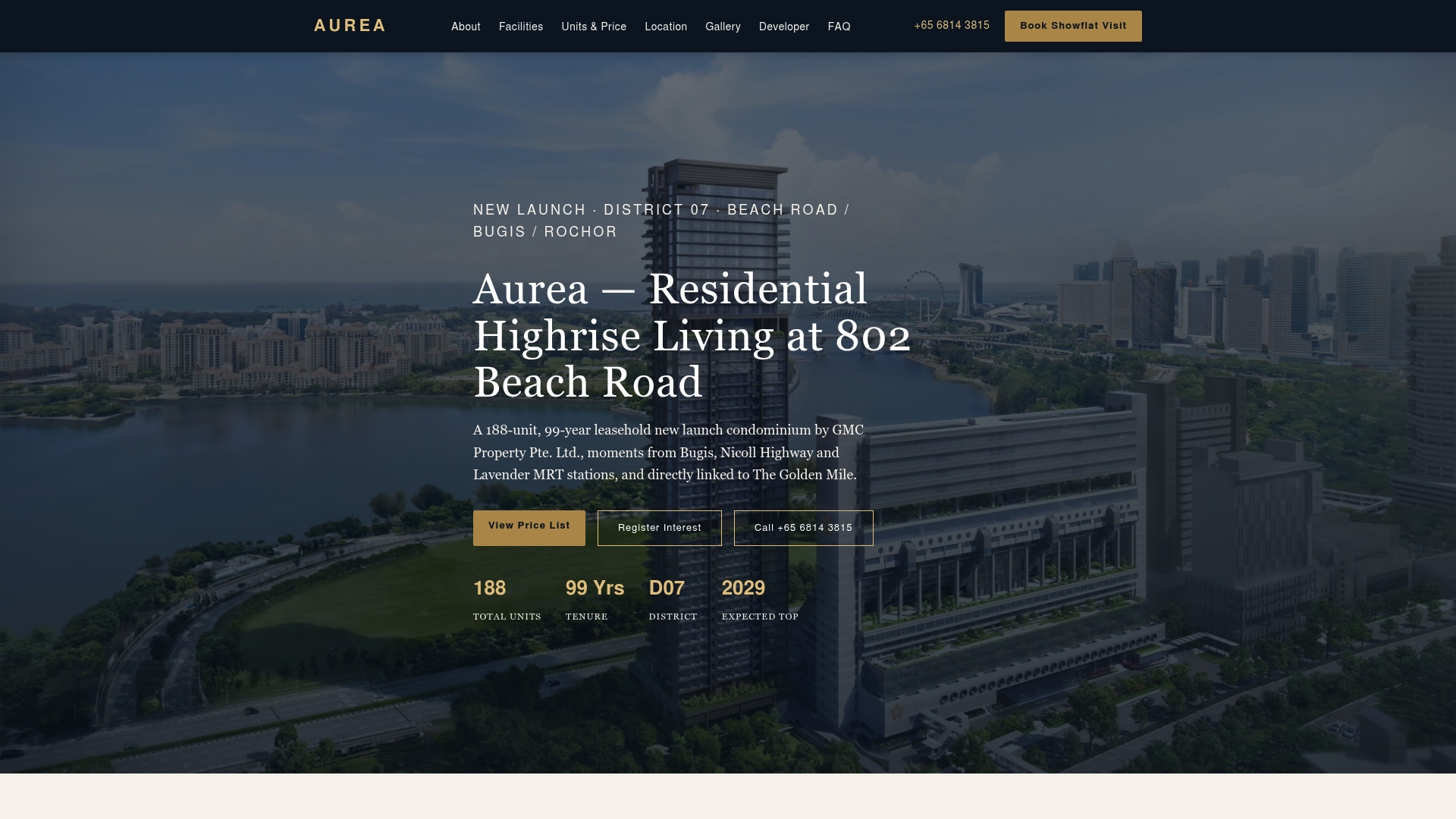
Aurea-sgcondo at 802 Beach Road offers 188 units from 2 to 5 bedrooms, plus two penthouses, with resort-style amenities across four levels and a direct link bridge to The Golden Mile. For buyers considering a trust-structured purchase, the sales team can walk you through the developer's process for trustee purchasers, confirm the contract wording, and connect you with conveyancing solicitors and tax advisers experienced in Singapore trust transactions. Completion is targeted in the coming years, giving trust buyers time to get the structure right before progressive payments begin.
Contact the Aurea-sgcondo team at Aurea-sgcondo to request a bespoke consultation on trust-structured purchases and conveyancing referrals.
Authoritative primary sources and further reading
The sources below are the primary references for trust property purchases in Singapore. Verify any government short link via Go before clicking, as official Singapore government agencies use that registry to authenticate short URLs.
- Stamp Duties (Trusts for Identifiable Individual Beneficiary) (Remission of ABSD) Rules 2022 (SSO/AGC): The statutory instrument itself, published by the Attorney-General's Chambers. Read this for the exact legal conditions that must be met for remission.
- Singsaver: Putting a House in Trust: A Singapore-focused consumer explainer covering financing constraints, CPF ineligibility, and practical pros and cons. Useful for a quick overview before engaging advisers.
- NerdWallet: Putting a House in Trust: Covers pros, cons, and common administrative costs. Again US-focused; use for general framework only.
- LP Legal: Units Owned by a Trust: Explains how to confirm trustee identity and authority via a Certification of Trust when dealing with management corporations and community associations.
- Property Tax Specialists: Family Trust for Property Investing: Asset protection rationale and limits, including the caveat that family-law claims can still reach trust assets. Australian context; verify Singapore equivalents with a local adviser.
When to consult a professional: if ABSD exposure is unclear, the trust deed is silent on property powers, any beneficiary is a foreign national, or you plan to use financing, engage a trust lawyer and tax adviser before signing anything. The cost of professional advice at the outset is a fraction of the cost of correcting a structural error after the option to purchase has been signed.
This article is general information, not a substitute for advice from a qualified financial advisor. Consult a qualified financial professional about your own circumstances before acting on anything here.
Sources
- Stamp Duties (Trusts for Identifiable Individual Beneficiary) (Remission of ABSD) Rules 2022
- Putting a House in Trust: Why, How, Pros and Cons
- What Community Associations Need to Know About Units Owned by a Trust | LP
- What is a family trust? How to buy property through it | Finder
- The Pros and Cons of a Family Trust for Property Investing